Things To Do In Braga
Tucked away in the lush hills of northern Portugal, Braga is one of those places that instantly felt full of history. I wandered along cobbled streets, passed beautiful old churches and kept stopping for the stunning hilltop views.
I spent hours getting lost in the historic center, climbing the famous stairs up to Bom Jesus do Monte and settling into cafés just to watch the city move around me. Braga has its own rhythm. Its full of energy, but typically Portuguese and never in a hurry and it’s easy to fall right into it.
Ready? Vamos.
I spent hours getting lost in the historic center, climbing the famous stairs up to Bom Jesus do Monte and settling into cafés just to watch the city move around me. Braga has its own rhythm. Its full of energy, but typically Portuguese and never in a hurry and it’s easy to fall right into it.
Ready? Vamos.
Things To Do In Braga
show
Stairs of Bom Jesus do Monte
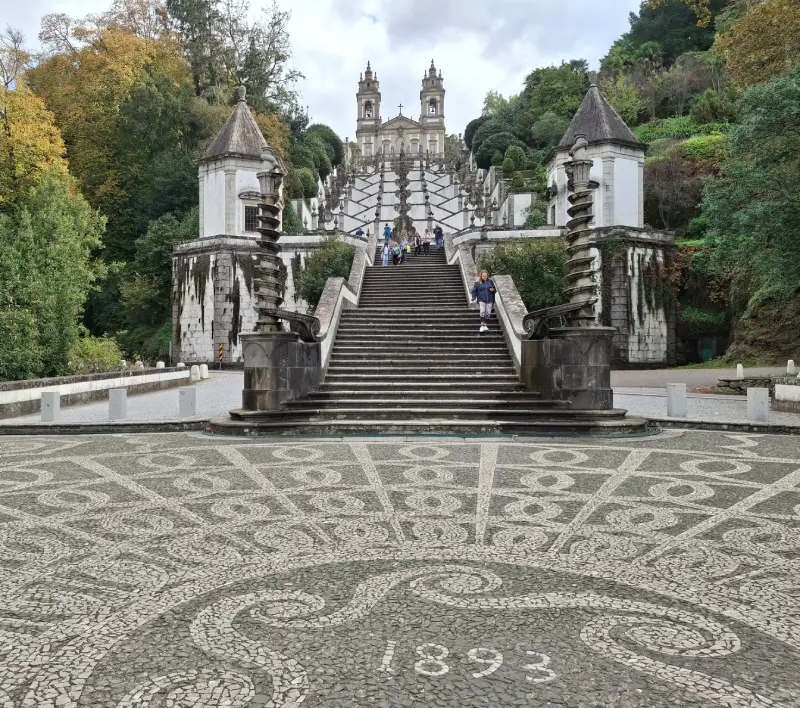
Rising up the hillside these long, winding stairs zigzags through the lush greenery of Braga. The Baroque staircase takes pilgrims and visitors on a symbolic journey of spiritual ascent.
It’s more than 500 steps to the top, but the climb is half the experience. Its zigzag design is adorned with fountains, statues and chapels representing the Five Senses, the Virtues and scenes from the Passion of Christ. Started in 1722 the stairs were not finished until 1781.
The harmony between architecture and nature makes the stairway not only a religious path, but also a powerful artistic and cultural monument. Its also great workout to boot.
It’s more than 500 steps to the top, but the climb is half the experience. Its zigzag design is adorned with fountains, statues and chapels representing the Five Senses, the Virtues and scenes from the Passion of Christ. Started in 1722 the stairs were not finished until 1781.
The harmony between architecture and nature makes the stairway not only a religious path, but also a powerful artistic and cultural monument. Its also great workout to boot.
Santuário do Bom Jesus do Monte
Sitting just outside Braga, the Santuário do Bom Jesus do Monte is one of those places that feels both peaceful and dramatic at the same time. You can spot it from a distance, the church perched high on the hill, reached by the long, winding staircase.
Built between 1784 and 1811, the church is a rare example of Neoclassical architecture in Portugal, designed by architect Carlos Amarante. Its harmonious façade, twin bell towers, and elegant interior contrast with the dramatic Baroque staircases below. Dedicated to Our Lord Jesus Christ, the church has long been an important pilgrimage site, symbolizing spiritual ascent and devotion.
Even if you’re not religious, it’s hard not to be impressed by the design and the views. You can take the funicular if you’d rather skip the climb, it’s the oldest water-powered one in the world and a fun little piece of history on its own. Dont worry you can also drive to the top if your prefer.
Built between 1784 and 1811, the church is a rare example of Neoclassical architecture in Portugal, designed by architect Carlos Amarante. Its harmonious façade, twin bell towers, and elegant interior contrast with the dramatic Baroque staircases below. Dedicated to Our Lord Jesus Christ, the church has long been an important pilgrimage site, symbolizing spiritual ascent and devotion.
Even if you’re not religious, it’s hard not to be impressed by the design and the views. You can take the funicular if you’d rather skip the climb, it’s the oldest water-powered one in the world and a fun little piece of history on its own. Dont worry you can also drive to the top if your prefer.
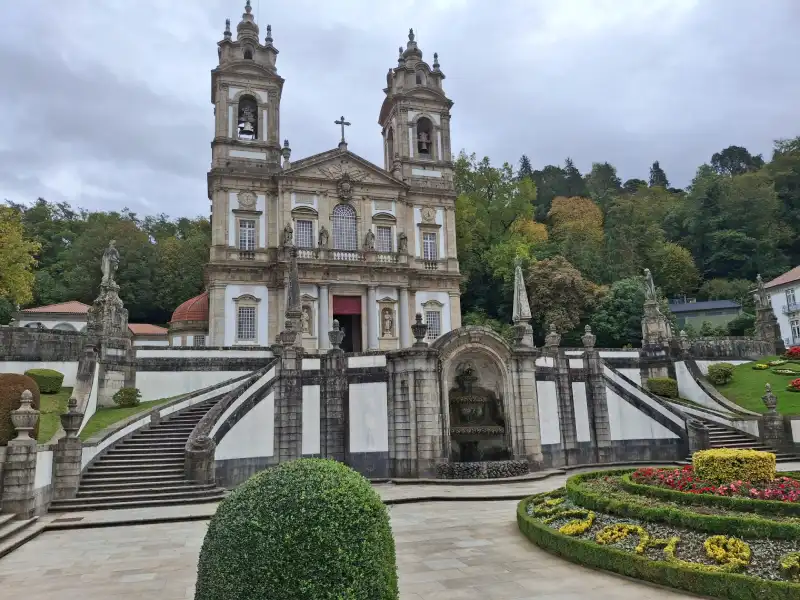
At the summit, the white twin-towered church stands against the sky, framed by gardens and quiet paths. Whether you come for the architecture, the view or just the calm, Bom Jesus do Monte has a way of slowing you down and reminding you about the meaning of life.
There are two ways to travel to Santuário do Bom Jesus do Monte, the first is driving to up the mountain taking the N309. There is parking at the santuary and it is only 1 euro for the day, arrive early on weekends to secure your parking spot.
The second way is to go via bus. Go to Campo da Vinha and take bus number 2 towards Bom Jesus. Get off at the last stop and then take the funicular to go up the mountain.
There are two ways to travel to Santuário do Bom Jesus do Monte, the first is driving to up the mountain taking the N309. There is parking at the santuary and it is only 1 euro for the day, arrive early on weekends to secure your parking spot.
The second way is to go via bus. Go to Campo da Vinha and take bus number 2 towards Bom Jesus. Get off at the last stop and then take the funicular to go up the mountain.
Funicular Of Bom Jesus do Monte
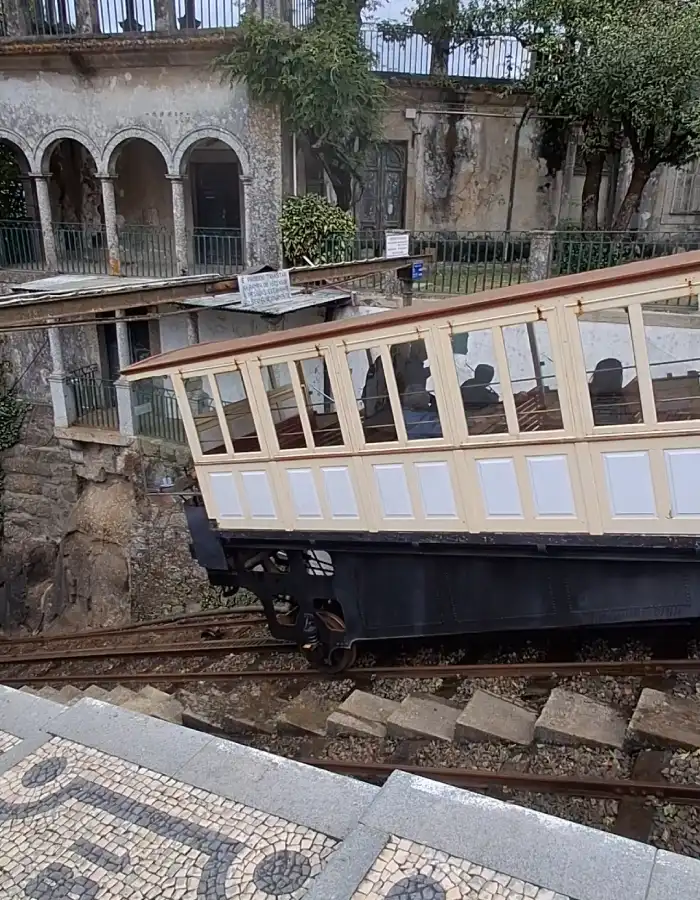
Opened in 1893, it is the oldest water-powered funicular in the world. The funicular works using gravity and water ballast, the heavier car descends while pulling the lighter one up.
Originally built to help pilgrims make their way up to the sanctuary, the funicular has become much more than just a means of transport. It’s a small piece of engineering history and a beloved part of the experience. Today, it’s still running, offering visitors an easy (and surprisingly charming) way up and doing so in a sustainable way.
Originally built to help pilgrims make their way up to the sanctuary, the funicular has become much more than just a means of transport. It’s a small piece of engineering history and a beloved part of the experience. Today, it’s still running, offering visitors an easy (and surprisingly charming) way up and doing so in a sustainable way.
Gardens Of Bom Jesus do Monte
The gardens of Bom Jesus do Monte are a welcome retreat after an arduous climb.
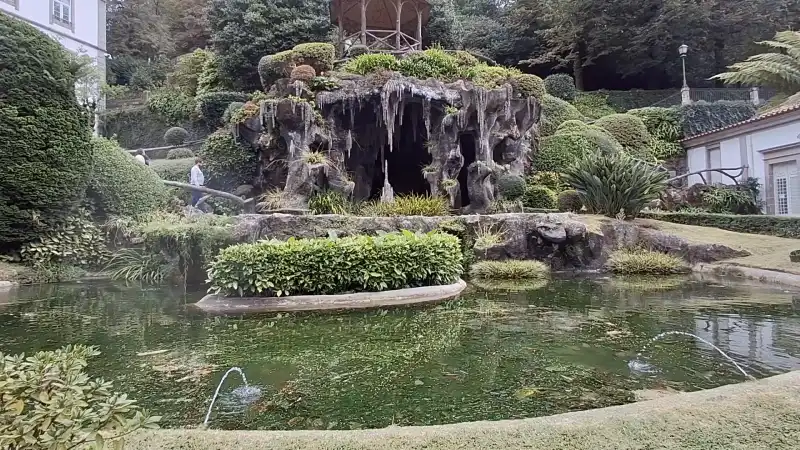
Built in the romantic style the gardens feature winding paths, dense trees, lakes, grottoes, and small bridges that blend naturally with the hillside landscape.
With panoramic views over Braga, the gardens complement the monumental stairway and church, making Bom Jesus do Monte not only a religious site but also a place of great beauty
Built in the romantic style the gardens feature winding paths, dense trees, lakes, grottoes, and small bridges that blend naturally with the hillside landscape.
With panoramic views over Braga, the gardens complement the monumental stairway and church, making Bom Jesus do Monte not only a religious site but also a place of great beauty
Dotted around the gardens are chapels, specifically the Chapels of the Passion of Christ.
They form part of the Via Crucis (Stations of the Cross) and depict scenes from Christ’s Passion, from the Last Supper to the Crucifixion. Each chapel contains life-size terracotta figures arranged as dramatic tableaux, helping pilgrims meditate on Christ’s suffering as they ascend the hill. These chapels were built mainly in the 18th century and are a key spiritual and artistic feature of the sanctuary.
There is alos boating lake and a café, ideal to spend a couple of leisurely hours. You will find locals and visitors gently rowing, especially during the summer months and adds to the scenic charm of the sanctuary grounds. The café offers refreshments, snacks and a place to rest while enjoying the gardens.
They form part of the Via Crucis (Stations of the Cross) and depict scenes from Christ’s Passion, from the Last Supper to the Crucifixion. Each chapel contains life-size terracotta figures arranged as dramatic tableaux, helping pilgrims meditate on Christ’s suffering as they ascend the hill. These chapels were built mainly in the 18th century and are a key spiritual and artistic feature of the sanctuary.
There is alos boating lake and a café, ideal to spend a couple of leisurely hours. You will find locals and visitors gently rowing, especially during the summer months and adds to the scenic charm of the sanctuary grounds. The café offers refreshments, snacks and a place to rest while enjoying the gardens.
Opening Hours of The Sanctuary
Summer 8am to 7pm
Winter 8am to 6pm
Summer 8am to 7pm
Winter 8am to 6pm
Opening Hours of The Funicular
Summer 8.55am to 7.55pm
Winter 8.55am to 12:55pm
& 13: 55pm to 5.55pm
Summer 8.55am to 7.55pm
Winter 8.55am to 12:55pm
& 13: 55pm to 5.55pm
Price of The Funicular
One way 2.5 euros
Return 4 Euros
One way 2.5 euros
Return 4 Euros
Santuário de Nossa Senhora do Sameiro
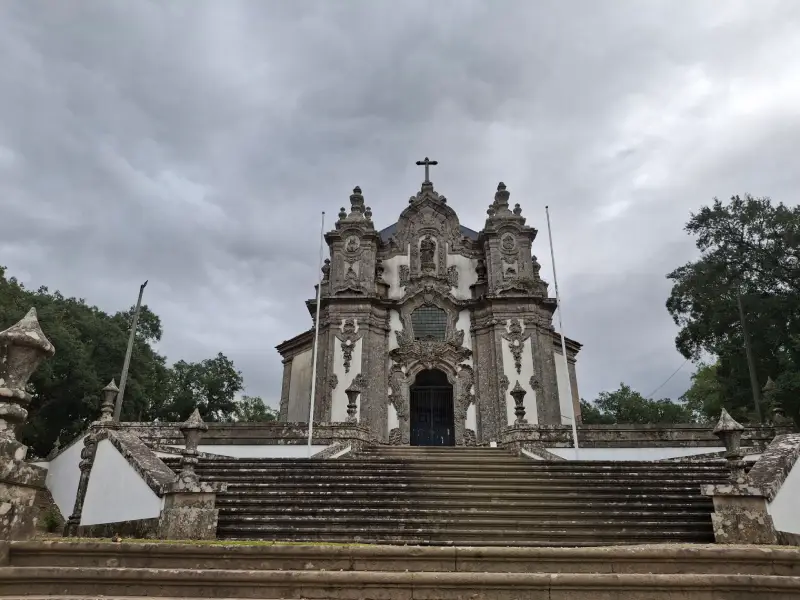
A short drive from Bom Jesus do Monte, the Santuário de Nossa Senhora do Sameiro offers a quieter, more reflective stop , although the views are just as impressive.
This hilltop sanctuary is one of Portugal’s most important Marian shrines, but you don’t need to be religious to appreciate its calm and beauty. Construction began on 14 June 1863, when Father Martinho António Pereira da Silva laid the first stone to honor the Immaculate Conception. Construction of the present neoclassical basilica started around 1890.
The wide esplanade, grand dome, and sweeping panoramas over Braga make it an easy place to linger.
Come for the sunset if you can, the light over the city and surrounding hills is unforgettable, and the peaceful atmosphere feels like a perfect pause in your travels.
This hilltop sanctuary is one of Portugal’s most important Marian shrines, but you don’t need to be religious to appreciate its calm and beauty. Construction began on 14 June 1863, when Father Martinho António Pereira da Silva laid the first stone to honor the Immaculate Conception. Construction of the present neoclassical basilica started around 1890.
The wide esplanade, grand dome, and sweeping panoramas over Braga make it an easy place to linger.
Come for the sunset if you can, the light over the city and surrounding hills is unforgettable, and the peaceful atmosphere feels like a perfect pause in your travels.
Opening Hours of The Sanctuary
Summer
Monday To Saturday, 8am to 8pm
Sunday, 7pm to 8pm
Spring/Autumn
Monday To Saturday, 8am to 7pm
Sunday, 7pm to 7pm
Winter
Monday To Saturday, 8am to 6pm
Sunday, 7pm to 6pm
Summer
Monday To Saturday, 8am to 8pm
Sunday, 7pm to 8pm
Spring/Autumn
Monday To Saturday, 8am to 7pm
Sunday, 7pm to 7pm
Winter
Monday To Saturday, 8am to 6pm
Sunday, 7pm to 6pm
Information
The entire grounds of the Sameiro Sanctuary are accessible 24 hours a day, seven days a week.
Public spaces are free to access for visitors, believers and non-believers alike. Respect and silence are requested, in keeping with the nature of the place.
The entire grounds of the Sameiro Sanctuary are accessible 24 hours a day, seven days a week.
Public spaces are free to access for visitors, believers and non-believers alike. Respect and silence are requested, in keeping with the nature of the place.
Sé de Braga (Braga Cathedral)
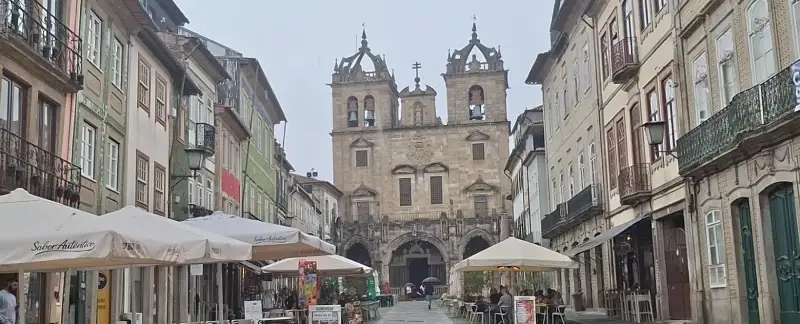
Right in the heart of the city, is the Sé de Braga ( the Braga Cathedral), is a must-see for anyone curious about Portugal’s deep Catholic history.
It’s the country’s oldest cathedral, dating back to the 11th century and you can feel that weight of time as soon as you step inside.
The mix of Romanesque, Gothic and Baroque styles tells the story of centuries of change, yet it all fits together beautifully. Take a quiet moment in the cloisters, peek at the ornate chapels and if you can, catch one of the organ recitals, the sound alone is worth the visit.
It’s the country’s oldest cathedral, dating back to the 11th century and you can feel that weight of time as soon as you step inside.
The mix of Romanesque, Gothic and Baroque styles tells the story of centuries of change, yet it all fits together beautifully. Take a quiet moment in the cloisters, peek at the ornate chapels and if you can, catch one of the organ recitals, the sound alone is worth the visit.
Opening Hours of The Church
08am-13pm
14pm-18pm
Price
2 Euros PP
08am-13pm
14pm-18pm
Price
2 Euros PP
Information
In this place of worship, only silence can ensure conditions conducive to meditation, but also to tranquility and respect for all who wish to use the space.
Only one entrance fee is charged for those visiting the Cathedral. Those who come to pray have free entry.
The tour of the interior of the church should be discreet.
In this place of worship, only silence can ensure conditions conducive to meditation, but also to tranquility and respect for all who wish to use the space.
Only one entrance fee is charged for those visiting the Cathedral. Those who come to pray have free entry.
The tour of the interior of the church should be discreet.
Palácio do Raio
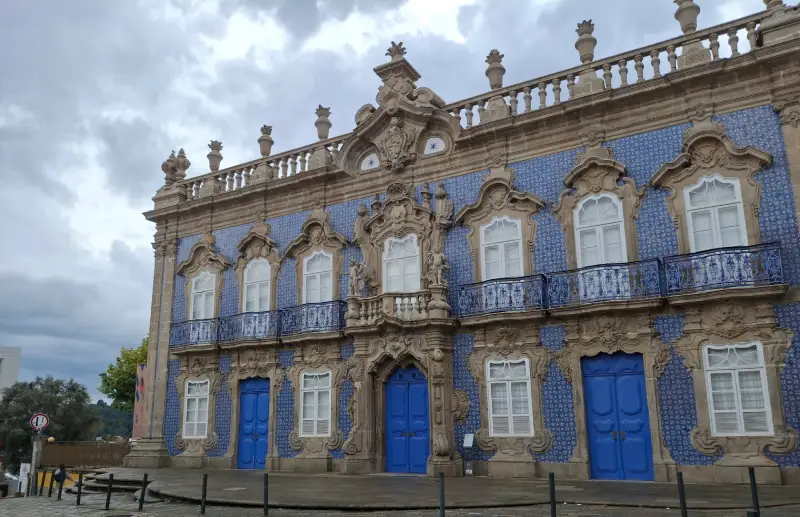
Palácio do Raio is one of Braga’s most striking buildings, you can’t miss its bright blue tile façade shimmering in the sunlight.
Built in the 18th century, it’s a bold example of Baroque architecture at its most ornate, with intricate stonework and grand balconies that hint at the city’s former wealth.
Inside, the palace now houses a small museum that explores Braga’s religious and civic history through art and artifacts. Even if you only stop by for a few photos, it’s worth a visit just to see how beautifully the detailed azulejos contrast with the city’s old stone streets.
Built in the 18th century, it’s a bold example of Baroque architecture at its most ornate, with intricate stonework and grand balconies that hint at the city’s former wealth.
Inside, the palace now houses a small museum that explores Braga’s religious and civic history through art and artifacts. Even if you only stop by for a few photos, it’s worth a visit just to see how beautifully the detailed azulejos contrast with the city’s old stone streets.
Opening Hours of The Palace
Summer
10am to 1pm & 2.39pm to 6.30pm
Winter
10am to 1pm & 2.39pm to 5.30pm
Price
2 Euros PP
Summer
10am to 1pm & 2.39pm to 6.30pm
Winter
10am to 1pm & 2.39pm to 5.30pm
Price
2 Euros PP
Price of The Palace
2 Euros PP
Address
Palácio do Raio
Rua do Raio
4700-920
2 Euros PP
Address
Palácio do Raio
Rua do Raio
4700-920
Jardim de Santa Bárbara
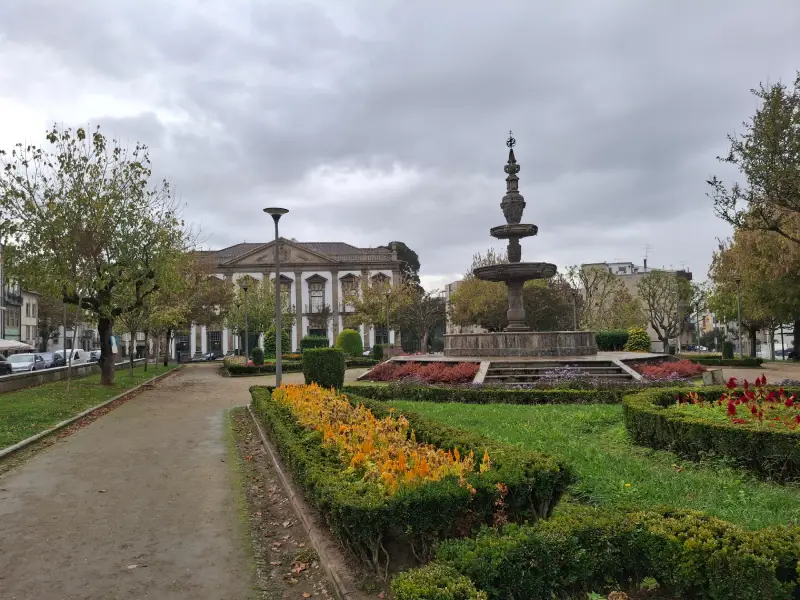
Right in the center of Braga, the Jardim de Santa Bárbara feels like a peaceful escape tucked between historic walls.
Perfectly trimmed hedges, colorful flower beds, and the backdrop of the old Archbishop’s Palace make it one of the prettiest spots in the city.
It’s the kind of place where locals stop for a quiet lunch or travelers linger with a coffee and a camera. Depending on the season, the garden bursts with tulips or roses, adding even more charm. Whether you’re exploring nearby streets or just need a break, this little garden is Braga at its most graceful.
Perfectly trimmed hedges, colorful flower beds, and the backdrop of the old Archbishop’s Palace make it one of the prettiest spots in the city.
It’s the kind of place where locals stop for a quiet lunch or travelers linger with a coffee and a camera. Depending on the season, the garden bursts with tulips or roses, adding even more charm. Whether you’re exploring nearby streets or just need a break, this little garden is Braga at its most graceful.
Arco da Porta Nova
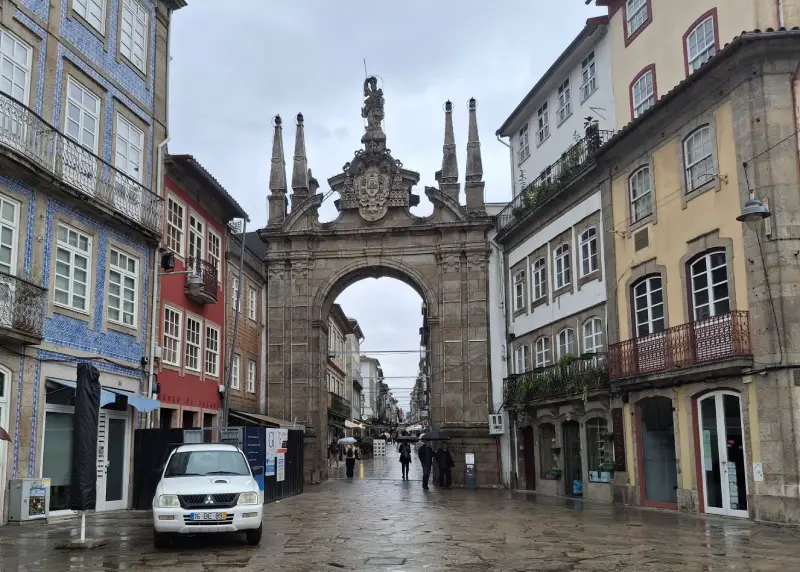
Arco da Porta Nova is one of Braga’s most recognizable landmarks, a grand stone arch that once marked the entrance to the old city.
Built in the 18th century, it’s more decorative than defensive, designed to impress visitors arriving from the west.
Today, it still feels like a gateway into Braga’s historic heart. Walk through it and you’re instantly surrounded by narrow streets, lively cafés, and centuries of history. The arch itself makes for great photos, especially when it’s lit up at night. It’s a simple spot, but it captures the spirit of Braga, welcoming, proud and full of life.
Built in the 18th century, it’s more decorative than defensive, designed to impress visitors arriving from the west.
Today, it still feels like a gateway into Braga’s historic heart. Walk through it and you’re instantly surrounded by narrow streets, lively cafés, and centuries of history. The arch itself makes for great photos, especially when it’s lit up at night. It’s a simple spot, but it captures the spirit of Braga, welcoming, proud and full of life.
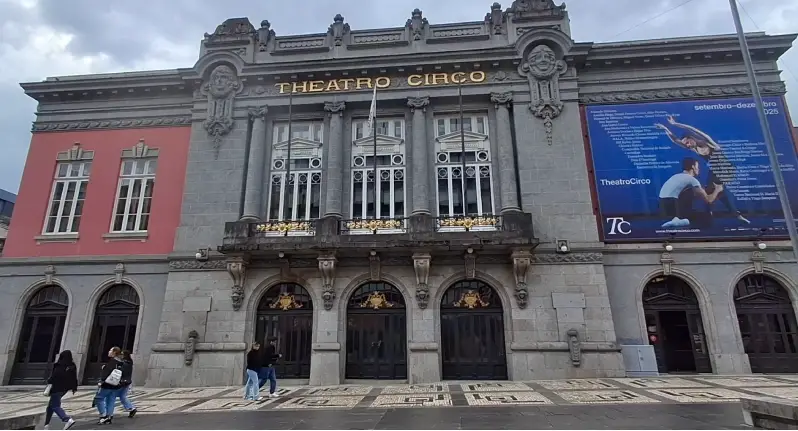
Theatro Circo
Theatro Circo is one of Braga’s cultural gems and easily one of the most beautiful theaters in Portugal. Opened in 1915, it blends Belle Époque elegance with modern flair, think chandeliers, red velvet seats, and a gold-trimmed stage that feels straight out of another era.
The theater hosts everything from concerts and film screenings to dance performances and local festivals, making it a lively part of the city’s creative scene. Even if you don’t catch a show, it’s worth stepping inside or joining a guided tour.
The theater hosts everything from concerts and film screenings to dance performances and local festivals, making it a lively part of the city’s creative scene. Even if you don’t catch a show, it’s worth stepping inside or joining a guided tour.
Praça da República
Praça da República is the heart of Braga, a lively square where the city’s rhythm truly comes alive. Surrounded by cafés, shops, and historic buildings, it’s the perfect spot to start your day or unwind after exploring.
Locals meet here for coffee, students fill the terraces and the gentle sound of the fountain adds to the easygoing vibe.
At one end stands the beautiful Arcada, framing the square with its graceful arches. Whether you’re people-watching, snapping photos, or just soaking up the atmosphere, Praça da República is a great place to relax and let the day go by.
Locals meet here for coffee, students fill the terraces and the gentle sound of the fountain adds to the easygoing vibe.
At one end stands the beautiful Arcada, framing the square with its graceful arches. Whether you’re people-watching, snapping photos, or just soaking up the atmosphere, Praça da República is a great place to relax and let the day go by.

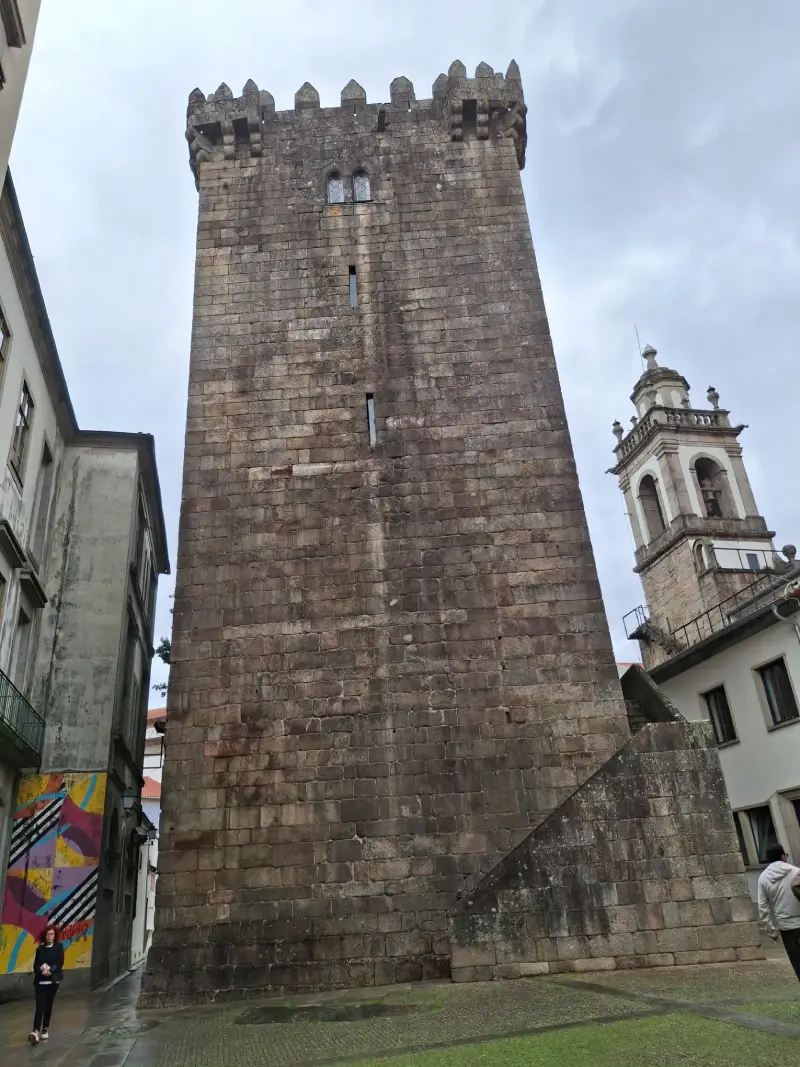
Torre de Menagem
Torre de Menagem is one of Braga’s most historic landmarks, a reminder of the city’s medieval past. This 14th-century keep once formed part of the city’s defensive castle, the keep is still standing tall to watch over Braga and protect its people.
Today, it’s a striking spot for history enthusiasts and photographers alike, offering a glimpse into the city’s fortified history. Its stone walls and narrow windows speak of centuries gone by, while its location near the historic center makes it easy to include in a walking tour. Even from the outside, Torre de Menagem captures the medieval charm that threads through Braga.
Today, it’s a striking spot for history enthusiasts and photographers alike, offering a glimpse into the city’s fortified history. Its stone walls and narrow windows speak of centuries gone by, while its location near the historic center makes it easy to include in a walking tour. Even from the outside, Torre de Menagem captures the medieval charm that threads through Braga.
The Historic Center
Braga began life as a Roman city called Bracara Augusta, and you can still see traces of that past today, particularly in the Roman Baths and other archaeological remains tucked away around the centre. I love how these layers of history sit so naturally alongside everyday life.
The historic centre is also where we come to slow down, sitting outside at one of the old cafés, watching people pass by and enjoying the relaxed atmosphere. On many days the streets are full of life, with local markets, festivals and traditional celebrations bringing a real sense of character to the city.
It’s an ideal place to explore on foot, as everything is close together and walking through the centre is the best way to get a feel for Braga’s history, culture and daily rhythm.
The historic centre is also where we come to slow down, sitting outside at one of the old cafés, watching people pass by and enjoying the relaxed atmosphere. On many days the streets are full of life, with local markets, festivals and traditional celebrations bringing a real sense of character to the city.
It’s an ideal place to explore on foot, as everything is close together and walking through the centre is the best way to get a feel for Braga’s history, culture and daily rhythm.
Mosteiro de Tibães
Just a short drive from Braga, Mosteiro de Tibães is a peaceful retreat with a rich history. Founded in the 6th century and later rebuilt in the 17th century, this Benedictine monastery showcases stunning Baroque architecture, intricate azulejos, and beautifully carved wooden details.
The gardens and cloisters add to the sense of calm, making it a perfect spot for a reflective stroll. Visitors can explore the church, museum, and surrounding grounds, discovering centuries of religious and cultural history.
Even if you’re not deeply into history or architecture, the combination of artistry, tranquility and open space makes Tibães worth the visit.
The gardens and cloisters add to the sense of calm, making it a perfect spot for a reflective stroll. Visitors can explore the church, museum, and surrounding grounds, discovering centuries of religious and cultural history.
Even if you’re not deeply into history or architecture, the combination of artistry, tranquility and open space makes Tibães worth the visit.
Sharing Is Caring ❤️
-
 In stock€30.00
 -
In stock€22.00
-
In stock€40.00
-
In stock€40.00



































Map Of Things To Do In Braga
Braga Weather
BRAGA WEATHERHow To Get To Braga
When To Visit Braga?
Other Portugal Travel Guides
Best Hotels in Braga
Things to Know Before You Go

Written by Clara R.
“I’ve been lucky enough to call Portugal home since 2011, living in the Algarve, Lisbon, and the Porto area. Every year, I make it a mission to travel around this beautiful country, discovering new places, hidden gems, and the best local spots. Portugal never stops surprising me!.”