Northern Portugal Itinerary
Where To Go & What To Do in 5 days
Tucked away at the top of the country are the lush green hills of Northern Portugal. Compared to the cosmopolitan energy of Porto or Lisbon, the north moves at a slower pace where history, heritage, landscape and tradition are important.
Here is the best 5 day Northern Portugal Itinerary.
Here is the best 5 day Northern Portugal Itinerary.
When To Visit Northern Portugal?
Northern Portugal Itinerary
show
1 Night In Braga
Tucked away in the lush hills of northern Portugal, Braga is one of those places that instantly felt full of history. Wander down historical streets, passing beautiful old churches and keep stopping for the stunning hilltop views.
Its full of energy, but typically Portuguese and never in a hurry and it’s easy to fall right into it your journey around Northern Portugal.
In our opinon one day is enough to view all that Braga has to offer.
Its full of energy, but typically Portuguese and never in a hurry and it’s easy to fall right into it your journey around Northern Portugal.
In our opinon one day is enough to view all that Braga has to offer.
Best Hotels in Braga
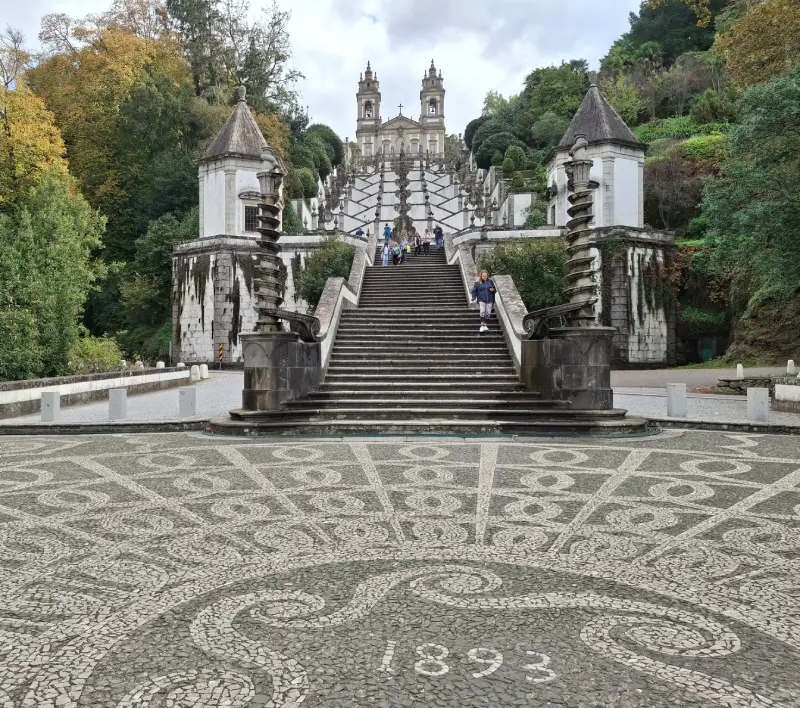
Stairs of Bom Jesus do Monte
Rising up the hillside these long, winding stairs zigzags through the lush greenery of Braga. The Baroque staircase takes pilgrims and visitors on a symbolic journey of spiritual ascent.
It’s more than 500 steps to the top, but the climb is half the experience. Its zigzag design is adorned with fountains, statues and chapels representing the Five Senses, the Virtues and scenes from the Passion of Christ. Started in 1722 the stairs were not finished until 1781.
The harmony between architecture and nature makes the stairway not only a religious path, but also a powerful artistic and cultural monument. Its also great workout to boot.
It’s more than 500 steps to the top, but the climb is half the experience. Its zigzag design is adorned with fountains, statues and chapels representing the Five Senses, the Virtues and scenes from the Passion of Christ. Started in 1722 the stairs were not finished until 1781.
The harmony between architecture and nature makes the stairway not only a religious path, but also a powerful artistic and cultural monument. Its also great workout to boot.
Santuário do Bom Jesus do Monte
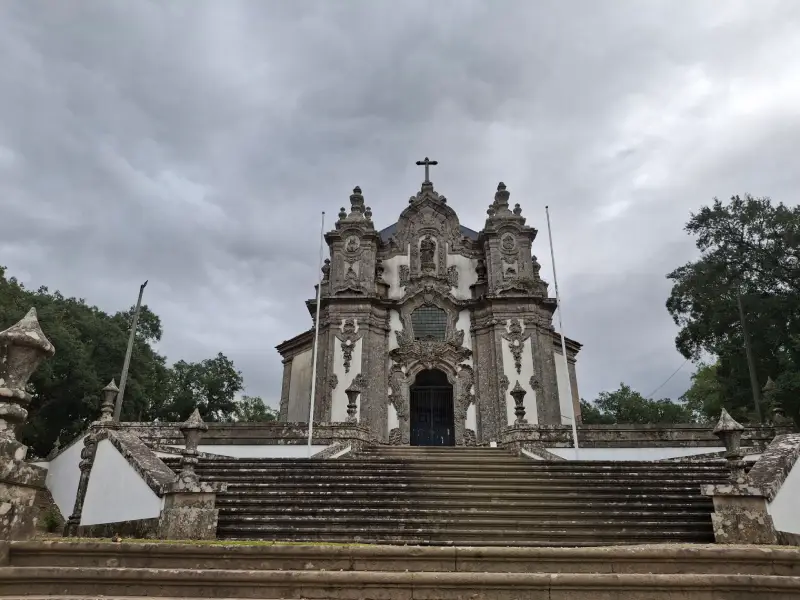
Sitting just outside Braga, the Santuário do Bom Jesus do Monte is one of those places that feels both peaceful and dramatic at the same time. You can spot it from a distance, the church perched high on the hill, reached by the long, winding staircase.
Built between 1784 and 1811, the church is a rare example of Neoclassical architecture in Portugal, designed by architect Carlos Amarante. Its harmonious façade, twin bell towers, and elegant interior contrast with the dramatic Baroque staircases below. Dedicated to Our Lord Jesus Christ, the church has long been an important pilgrimage site, symbolizing spiritual ascent and devotion.
Even if you’re not religious, it’s hard not to be impressed by the design and the views. You can take the funicular if you’d rather skip the climb, it’s the oldest water-powered one in the world and a fun little piece of history on its own. Dont worry you can also drive to the top if your prefer.
Built between 1784 and 1811, the church is a rare example of Neoclassical architecture in Portugal, designed by architect Carlos Amarante. Its harmonious façade, twin bell towers, and elegant interior contrast with the dramatic Baroque staircases below. Dedicated to Our Lord Jesus Christ, the church has long been an important pilgrimage site, symbolizing spiritual ascent and devotion.
Even if you’re not religious, it’s hard not to be impressed by the design and the views. You can take the funicular if you’d rather skip the climb, it’s the oldest water-powered one in the world and a fun little piece of history on its own. Dont worry you can also drive to the top if your prefer.
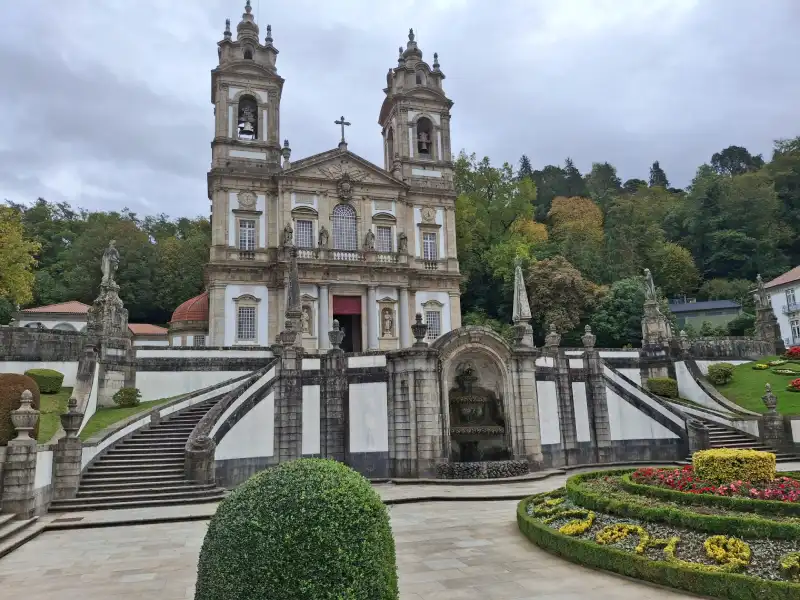
At the summit, the white twin-towered church stands against the sky, framed by gardens and quiet paths. Whether you come for the architecture, the view or just the calm, Bom Jesus do Monte has a way of slowing you down and reminding you about the meaning of life.
There are two ways to travel to Santuário do Bom Jesus do Monte, the first is driving to up the mountain taking the N309. There is parking at the santuary and it is only 1 euro for the day, arrive early on weekends to secure your parking spot.
The second way is to go via bus. Go to Campo da Vinha and take bus number 2 towards Bom Jesus. Get off at the last stop and then take the funicular to go up the mountain.
There are two ways to travel to Santuário do Bom Jesus do Monte, the first is driving to up the mountain taking the N309. There is parking at the santuary and it is only 1 euro for the day, arrive early on weekends to secure your parking spot.
The second way is to go via bus. Go to Campo da Vinha and take bus number 2 towards Bom Jesus. Get off at the last stop and then take the funicular to go up the mountain.
Funicular Of Bom Jesus do Monte
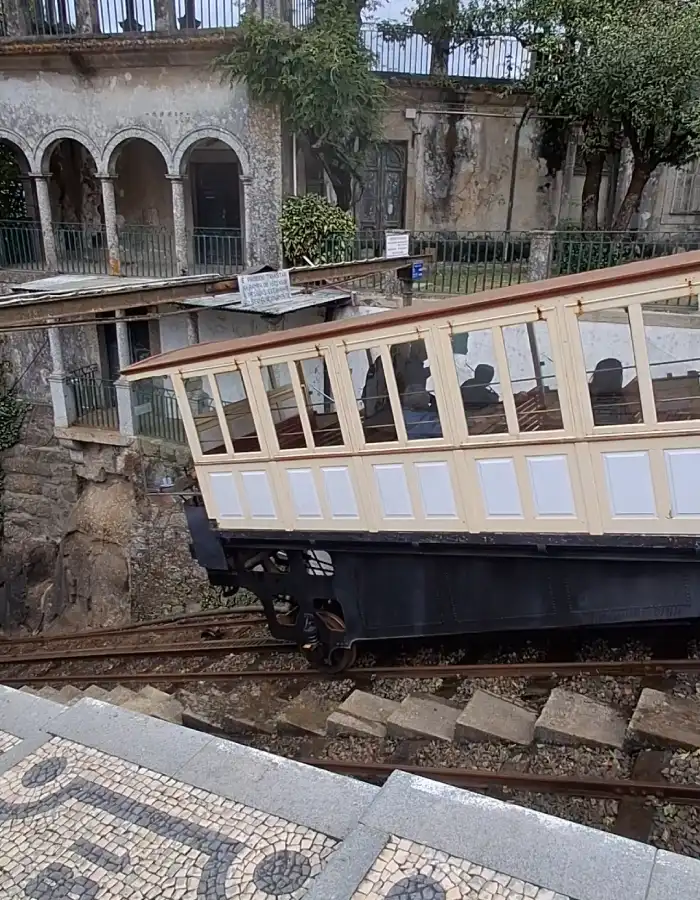
Opened in 1893, it is the oldest water-powered funicular in the world. The funicular works using gravity and water ballast, the heavier car descends while pulling the lighter one up.
Originally built to help pilgrims make their way up to the sanctuary, the funicular has become much more than just a means of transport. It’s a small piece of engineering history and a beloved part of the experience. Today, it’s still running, offering visitors an easy (and surprisingly charming) way up and doing so in a sustainable way.
Originally built to help pilgrims make their way up to the sanctuary, the funicular has become much more than just a means of transport. It’s a small piece of engineering history and a beloved part of the experience. Today, it’s still running, offering visitors an easy (and surprisingly charming) way up and doing so in a sustainable way.
Gardens Of Bom Jesus do Monte
The gardens of Bom Jesus do Monte are a welcome retreat after an arduous climb.
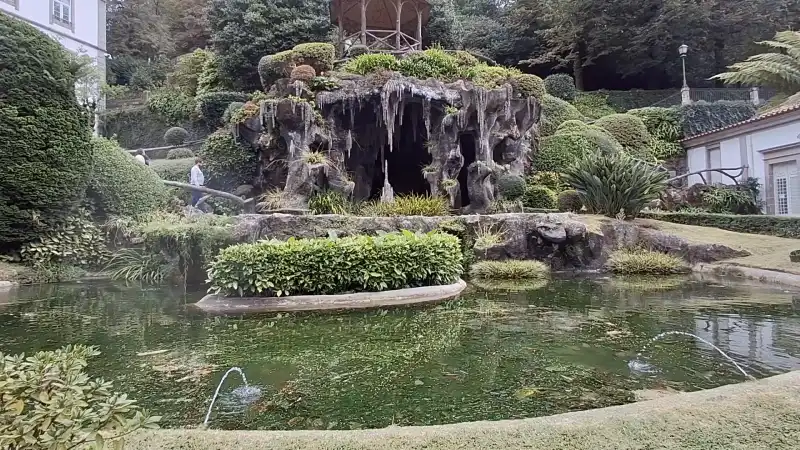
Built in the romantic style the gardens feature winding paths, dense trees, lakes, grottoes, and small bridges that blend naturally with the hillside landscape.
With panoramic views over Braga, the gardens complement the monumental stairway and church, making Bom Jesus do Monte not only a religious site but also a place of great beauty
Built in the romantic style the gardens feature winding paths, dense trees, lakes, grottoes, and small bridges that blend naturally with the hillside landscape.
With panoramic views over Braga, the gardens complement the monumental stairway and church, making Bom Jesus do Monte not only a religious site but also a place of great beauty
Dotted around the gardens are chapels, specifically the Chapels of the Passion of Christ.
They form part of the Via Crucis (Stations of the Cross) and depict scenes from Christ’s Passion, from the Last Supper to the Crucifixion. Each chapel contains life-size terracotta figures arranged as dramatic tableaux, helping pilgrims meditate on Christ’s suffering as they ascend the hill. These chapels were built mainly in the 18th century and are a key spiritual and artistic feature of the sanctuary.
There is alos boating lake and a café, ideal to spend a couple of leisurely hours. You will find locals and visitors gently rowing, especially during the summer months and adds to the scenic charm of the sanctuary grounds. The café offers refreshments, snacks and a place to rest while enjoying the gardens.
They form part of the Via Crucis (Stations of the Cross) and depict scenes from Christ’s Passion, from the Last Supper to the Crucifixion. Each chapel contains life-size terracotta figures arranged as dramatic tableaux, helping pilgrims meditate on Christ’s suffering as they ascend the hill. These chapels were built mainly in the 18th century and are a key spiritual and artistic feature of the sanctuary.
There is alos boating lake and a café, ideal to spend a couple of leisurely hours. You will find locals and visitors gently rowing, especially during the summer months and adds to the scenic charm of the sanctuary grounds. The café offers refreshments, snacks and a place to rest while enjoying the gardens.
Opening Hours of The Sanctuary
Summer 8am to 7pm
Winter 8am to 6pm
Summer 8am to 7pm
Winter 8am to 6pm
Opening Hours of The Funicular
Summer 8.55am to 7.55pm
Winter 8.55am to 12:55pm
& 13: 55pm to 5.55pm
Summer 8.55am to 7.55pm
Winter 8.55am to 12:55pm
& 13: 55pm to 5.55pm
Price of The Funicular
One way 2.5 euros
Return 4 Euros
One way 2.5 euros
Return 4 Euros
Santuário de Nossa Senhora do Sameiro
A short drive from Bom Jesus do Monte, the Santuário de Nossa Senhora do Sameiro offers a quieter, more reflective stop , although the views are just as impressive.
This hilltop sanctuary is one of Portugal’s most important Marian shrines, but you don’t need to be religious to appreciate its calm and beauty. Construction began on 14 June 1863, when Father Martinho António Pereira da Silva laid the first stone to honor the Immaculate Conception. Construction of the present neoclassical basilica started around 1890.
The wide esplanade, grand dome, and sweeping panoramas over Braga make it an easy place to linger.
Come for the sunset if you can, the light over the city and surrounding hills is unforgettable, and the peaceful atmosphere feels like a perfect pause in your travels.
This hilltop sanctuary is one of Portugal’s most important Marian shrines, but you don’t need to be religious to appreciate its calm and beauty. Construction began on 14 June 1863, when Father Martinho António Pereira da Silva laid the first stone to honor the Immaculate Conception. Construction of the present neoclassical basilica started around 1890.
The wide esplanade, grand dome, and sweeping panoramas over Braga make it an easy place to linger.
Come for the sunset if you can, the light over the city and surrounding hills is unforgettable, and the peaceful atmosphere feels like a perfect pause in your travels.
Opening Hours of The Sanctuary
Summer
Monday To Saturday, 8am to 8pm
Sunday, 7pm to 8pm
Spring/Autumn
Monday To Saturday, 8am to 7pm
Sunday, 7pm to 7pm
Winter
Monday To Saturday, 8am to 6pm
Sunday, 7pm to 6pm
Summer
Monday To Saturday, 8am to 8pm
Sunday, 7pm to 8pm
Spring/Autumn
Monday To Saturday, 8am to 7pm
Sunday, 7pm to 7pm
Winter
Monday To Saturday, 8am to 6pm
Sunday, 7pm to 6pm
Information
The entire grounds of the Sameiro Sanctuary are accessible 24 hours a day, seven days a week.
Public spaces are free to access for visitors, believers and non-believers alike. Respect and silence are requested, in keeping with the nature of the place.
The entire grounds of the Sameiro Sanctuary are accessible 24 hours a day, seven days a week.
Public spaces are free to access for visitors, believers and non-believers alike. Respect and silence are requested, in keeping with the nature of the place.
Sé de Braga (Braga Cathedral)
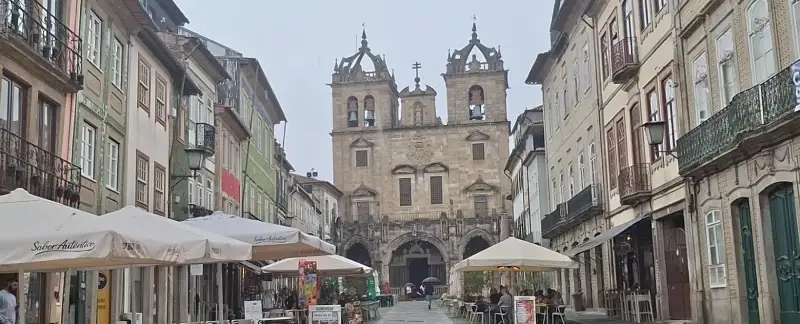
Right in the heart of the city, is the Sé de Braga ( the Braga Cathedral), is a must-see for anyone curious about Portugal’s deep Catholic history.
It’s the country’s oldest cathedral, dating back to the 11th century and you can feel that weight of time as soon as you step inside.
The mix of Romanesque, Gothic and Baroque styles tells the story of centuries of change, yet it all fits together beautifully. Take a quiet moment in the cloisters, peek at the ornate chapels and if you can, catch one of the organ recitals, the sound alone is worth the visit.
It’s the country’s oldest cathedral, dating back to the 11th century and you can feel that weight of time as soon as you step inside.
The mix of Romanesque, Gothic and Baroque styles tells the story of centuries of change, yet it all fits together beautifully. Take a quiet moment in the cloisters, peek at the ornate chapels and if you can, catch one of the organ recitals, the sound alone is worth the visit.
Opening Hours of The Church
08am-13pm
14pm-18pm
Price
2 Euros PP
08am-13pm
14pm-18pm
Price
2 Euros PP
Information
In this place of worship, only silence can ensure conditions conducive to meditation, but also to tranquility and respect for all who wish to use the space.
Only one entrance fee is charged for those visiting the Cathedral. Those who come to pray have free entry.
The tour of the interior of the church should be discreet.
In this place of worship, only silence can ensure conditions conducive to meditation, but also to tranquility and respect for all who wish to use the space.
Only one entrance fee is charged for those visiting the Cathedral. Those who come to pray have free entry.
The tour of the interior of the church should be discreet.
Watch Northern Portugal Itinerary
Palácio do Raio
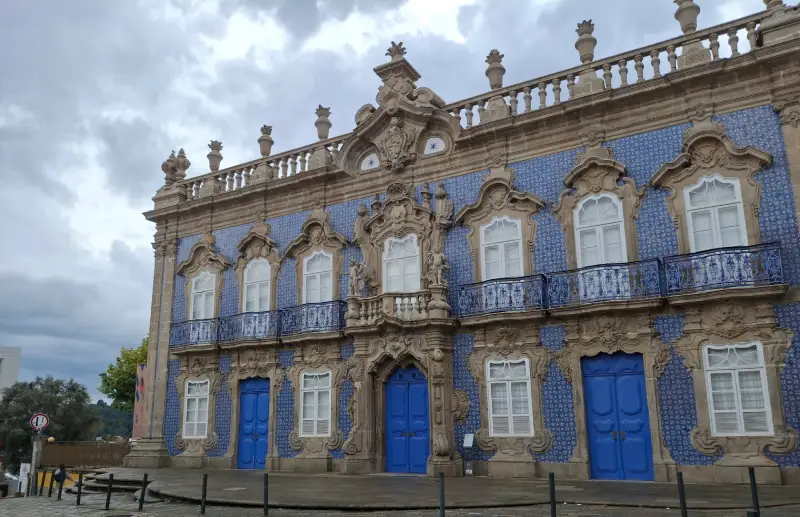
Palácio do Raio is one of Braga’s most striking buildings, you can’t miss its bright blue tile façade shimmering in the sunlight.
Built in the 18th century, it’s a bold example of Baroque architecture at its most ornate, with intricate stonework and grand balconies that hint at the city’s former wealth.
Inside, the palace now houses a small museum that explores Braga’s religious and civic history through art and artifacts. Even if you only stop by for a few photos, it’s worth a visit just to see how beautifully the detailed azulejos contrast with the city’s old stone streets.
Built in the 18th century, it’s a bold example of Baroque architecture at its most ornate, with intricate stonework and grand balconies that hint at the city’s former wealth.
Inside, the palace now houses a small museum that explores Braga’s religious and civic history through art and artifacts. Even if you only stop by for a few photos, it’s worth a visit just to see how beautifully the detailed azulejos contrast with the city’s old stone streets.
Opening Hours of The Palace
Summer
10am to 1pm & 2.39pm to 6.30pm
Winter
10am to 1pm & 2.39pm to 5.30pm
Price
2 Euros PP
Summer
10am to 1pm & 2.39pm to 6.30pm
Winter
10am to 1pm & 2.39pm to 5.30pm
Price
2 Euros PP
Price of The Palace
2 Euros PP
Address
Palácio do Raio
Rua do Raio
4700-920
2 Euros PP
Address
Palácio do Raio
Rua do Raio
4700-920
Jardim de Santa Bárbara
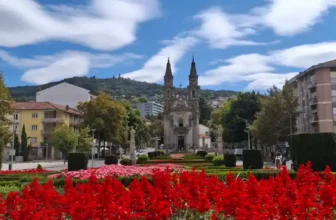
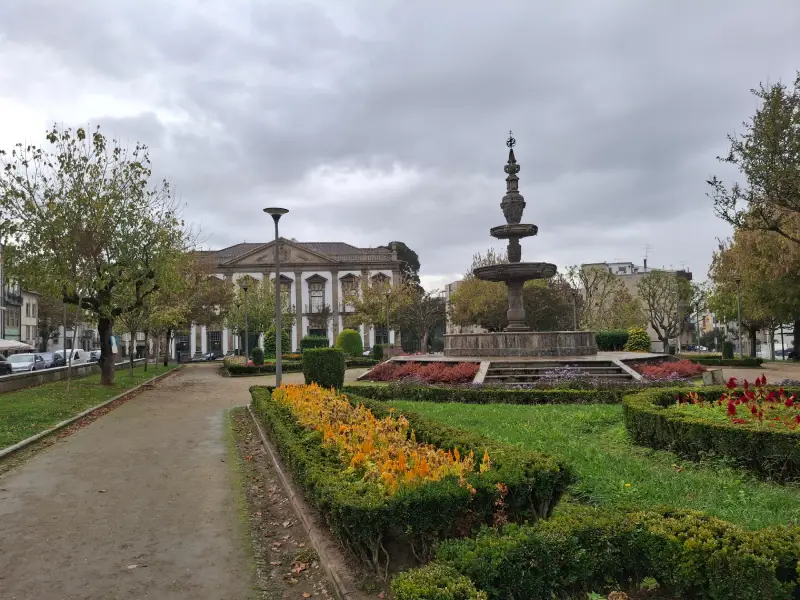
Right in the center of Braga, the Jardim de Santa Bárbara feels like a peaceful escape tucked between historic walls.
Perfectly trimmed hedges, colorful flower beds, and the backdrop of the old Archbishop’s Palace make it one of the prettiest spots in the city.
It’s the kind of place where locals stop for a quiet lunch or travelers linger with a coffee and a camera. Depending on the season, the garden bursts with tulips or roses, adding even more charm. Whether you’re exploring nearby streets or just need a break, this little garden is Braga at its most graceful.
Perfectly trimmed hedges, colorful flower beds, and the backdrop of the old Archbishop’s Palace make it one of the prettiest spots in the city.
It’s the kind of place where locals stop for a quiet lunch or travelers linger with a coffee and a camera. Depending on the season, the garden bursts with tulips or roses, adding even more charm. Whether you’re exploring nearby streets or just need a break, this little garden is Braga at its most graceful.
Arco da Porta Nova
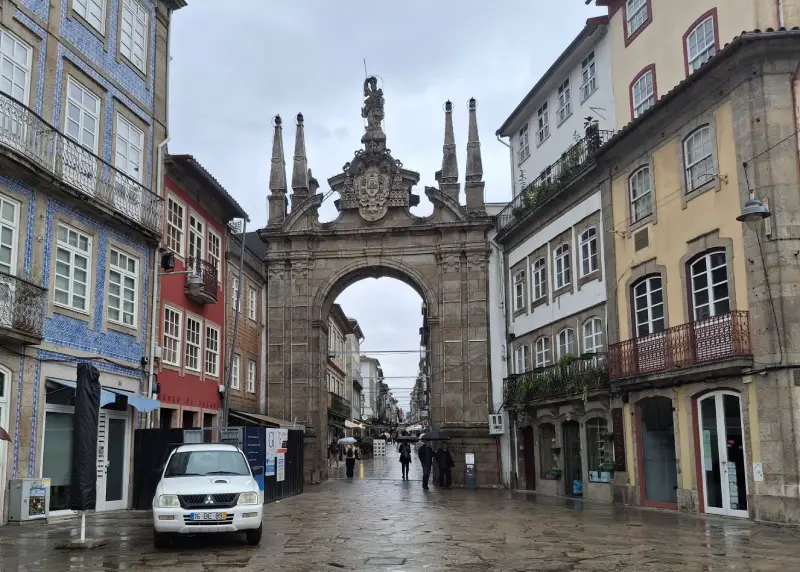
Arco da Porta Nova is one of Braga’s most recognizable landmarks, a grand stone arch that once marked the entrance to the old city.
Built in the 18th century, it’s more decorative than defensive, designed to impress visitors arriving from the west.
Today, it still feels like a gateway into Braga’s historic heart. Walk through it and you’re instantly surrounded by narrow streets, lively cafés, and centuries of history. The arch itself makes for great photos, especially when it’s lit up at night. It’s a simple spot, but it captures the spirit of Braga, welcoming, proud and full of life.
Built in the 18th century, it’s more decorative than defensive, designed to impress visitors arriving from the west.
Today, it still feels like a gateway into Braga’s historic heart. Walk through it and you’re instantly surrounded by narrow streets, lively cafés, and centuries of history. The arch itself makes for great photos, especially when it’s lit up at night. It’s a simple spot, but it captures the spirit of Braga, welcoming, proud and full of life.
Theatro Circo
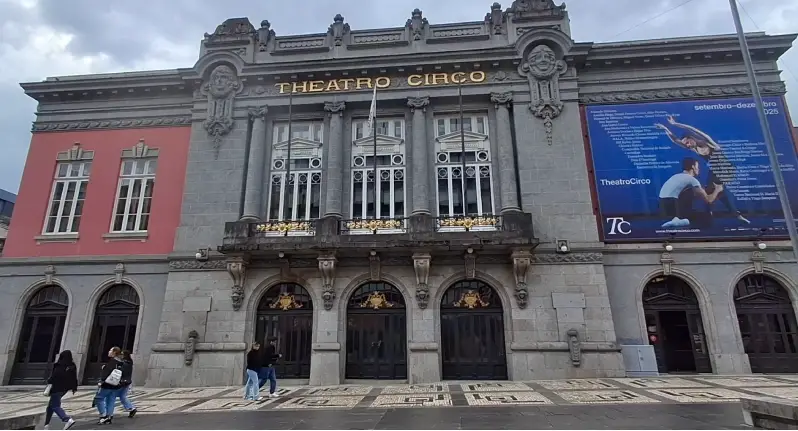
Theatro Circo is one of Braga’s cultural gems and easily one of the most beautiful theaters in Portugal. Opened in 1915, it blends Belle Époque elegance with modern flair, think chandeliers, red velvet seats, and a gold-trimmed stage that feels straight out of another era.
The theater hosts everything from concerts and film screenings to dance performances and local festivals, making it a lively part of the city’s creative scene. Even if you don’t catch a show, it’s worth stepping inside or joining a guided tour.
The theater hosts everything from concerts and film screenings to dance performances and local festivals, making it a lively part of the city’s creative scene. Even if you don’t catch a show, it’s worth stepping inside or joining a guided tour.
Praça da República
Praça da República is the heart of Braga, a lively square where the city’s rhythm truly comes alive. Surrounded by cafés, shops, and historic buildings, it’s the perfect spot to start your day or unwind after exploring.
Locals meet here for coffee, students fill the terraces and the gentle sound of the fountain adds to the easygoing vibe.
At one end stands the beautiful Arcada, framing the square with its graceful arches. Whether you’re people-watching, snapping photos, or just soaking up the atmosphere, Praça da República is a great place to relax and let the day go by.
Locals meet here for coffee, students fill the terraces and the gentle sound of the fountain adds to the easygoing vibe.
At one end stands the beautiful Arcada, framing the square with its graceful arches. Whether you’re people-watching, snapping photos, or just soaking up the atmosphere, Praça da República is a great place to relax and let the day go by.

Torre de Menagem
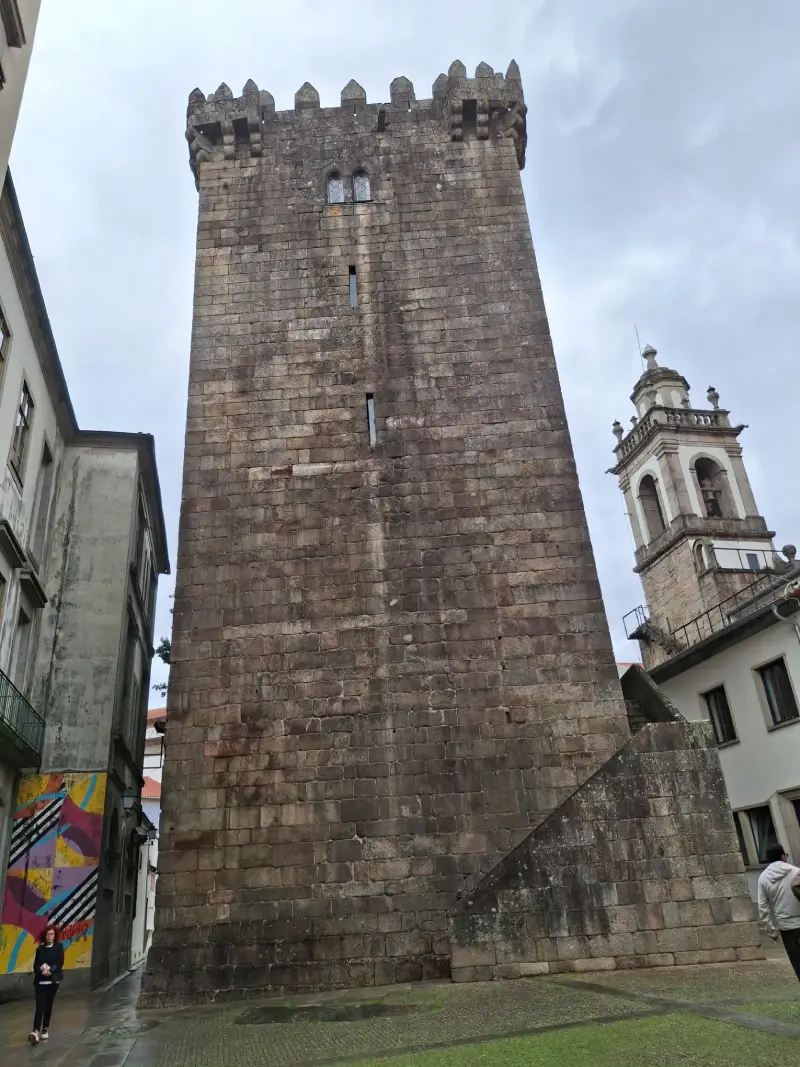
Torre de Menagem is one of Braga’s most historic landmarks, a reminder of the city’s medieval past. This 14th-century keep once formed part of the city’s defensive castle, the keep is still standing tall to watch over Braga and protect its people.
Today, it’s a striking spot for history enthusiasts and photographers alike, offering a glimpse into the city’s fortified history. Its stone walls and narrow windows speak of centuries gone by, while its location near the historic center makes it easy to include in a walking tour. Even from the outside, Torre de Menagem captures the medieval charm that threads through Braga.
Today, it’s a striking spot for history enthusiasts and photographers alike, offering a glimpse into the city’s fortified history. Its stone walls and narrow windows speak of centuries gone by, while its location near the historic center makes it easy to include in a walking tour. Even from the outside, Torre de Menagem captures the medieval charm that threads through Braga.
The Historic Center
Braga began life as a Roman city called Bracara Augusta, and you can still see traces of that past today, particularly in the Roman Baths and other archaeological remains tucked away around the centre. I love how these layers of history sit so naturally alongside everyday life.
The historic centre is also where we come to slow down, sitting outside at one of the old cafés, watching people pass by and enjoying the relaxed atmosphere. On many days the streets are full of life, with local markets, festivals and traditional celebrations bringing a real sense of character to the city.
It’s an ideal place to explore on foot, as everything is close together and walking through the centre is the best way to get a feel for Braga’s history, culture and daily rhythm.
The historic centre is also where we come to slow down, sitting outside at one of the old cafés, watching people pass by and enjoying the relaxed atmosphere. On many days the streets are full of life, with local markets, festivals and traditional celebrations bringing a real sense of character to the city.
It’s an ideal place to explore on foot, as everything is close together and walking through the centre is the best way to get a feel for Braga’s history, culture and daily rhythm.
Mosteiro de Tibães
Just a short drive from Braga, Mosteiro de Tibães is a peaceful retreat with a rich history. Founded in the 6th century and later rebuilt in the 17th century, this Benedictine monastery showcases stunning Baroque architecture, intricate azulejos, and beautifully carved wooden details.
The gardens and cloisters add to the sense of calm, making it a perfect spot for a reflective stroll. Visitors can explore the church, museum, and surrounding grounds, discovering centuries of religious and cultural history.
Even if you’re not deeply into history or architecture, the combination of artistry, tranquility and open space makes Tibães worth the visit.
The gardens and cloisters add to the sense of calm, making it a perfect spot for a reflective stroll. Visitors can explore the church, museum, and surrounding grounds, discovering centuries of religious and cultural history.
Even if you’re not deeply into history or architecture, the combination of artistry, tranquility and open space makes Tibães worth the visit.
Sharing Is Caring ❤️
-
 In stock€30.00
 -
In stock€22.00
-
In stock€40.00
-
In stock€40.00










































How To Get To Braga
2 Nights In Guimarães
Often called the birthplace of Portugal, Guimarães is a city where history is seeping from every corner. With its medieval streets, castle towers and vibrant plazas, this UNESCO World Heritage site blends centuries of tradition with youthful energy.
Guimarães invites you to slow down and explore where Portugal’s story began.
Guimarães is easy to reach from Braga. It is just 25km away and you can either grab an Bolt, travel by flixbus for as little as 1 euro is you book in advance.
Guimarães invites you to slow down and explore where Portugal’s story began.
Guimarães is easy to reach from Braga. It is just 25km away and you can either grab an Bolt, travel by flixbus for as little as 1 euro is you book in advance.
Guimarães Historic Centre
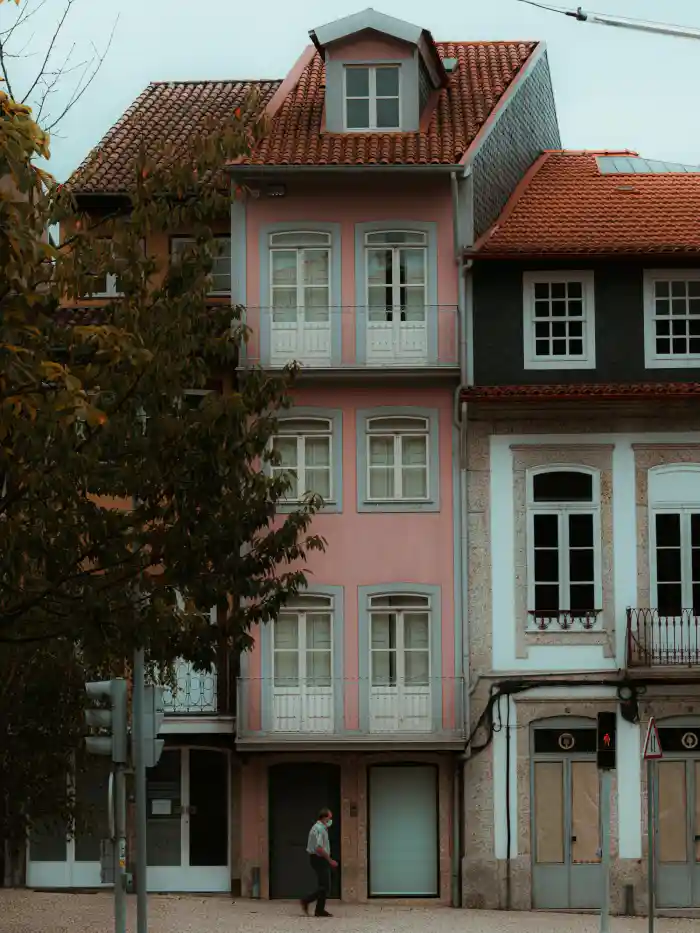
Guimarães is called the “birthplace of Portugal”. The old town is a compact network of granite paved streets, small squares and medieval buildings
What makes Guimarães stand out is how normal life carries on inside this UNESCO listed centre. You’ll pass kids playing football in the squares, laundry hanging from windows and locals running errands.
It’s not a museum piece, it’s a town that just happens to have kept its medieval heart intact.
The past pops up on every street corner here.
What makes Guimarães stand out is how normal life carries on inside this UNESCO listed centre. You’ll pass kids playing football in the squares, laundry hanging from windows and locals running errands.
It’s not a museum piece, it’s a town that just happens to have kept its medieval heart intact.
The past pops up on every street corner here.
São Gualter Church
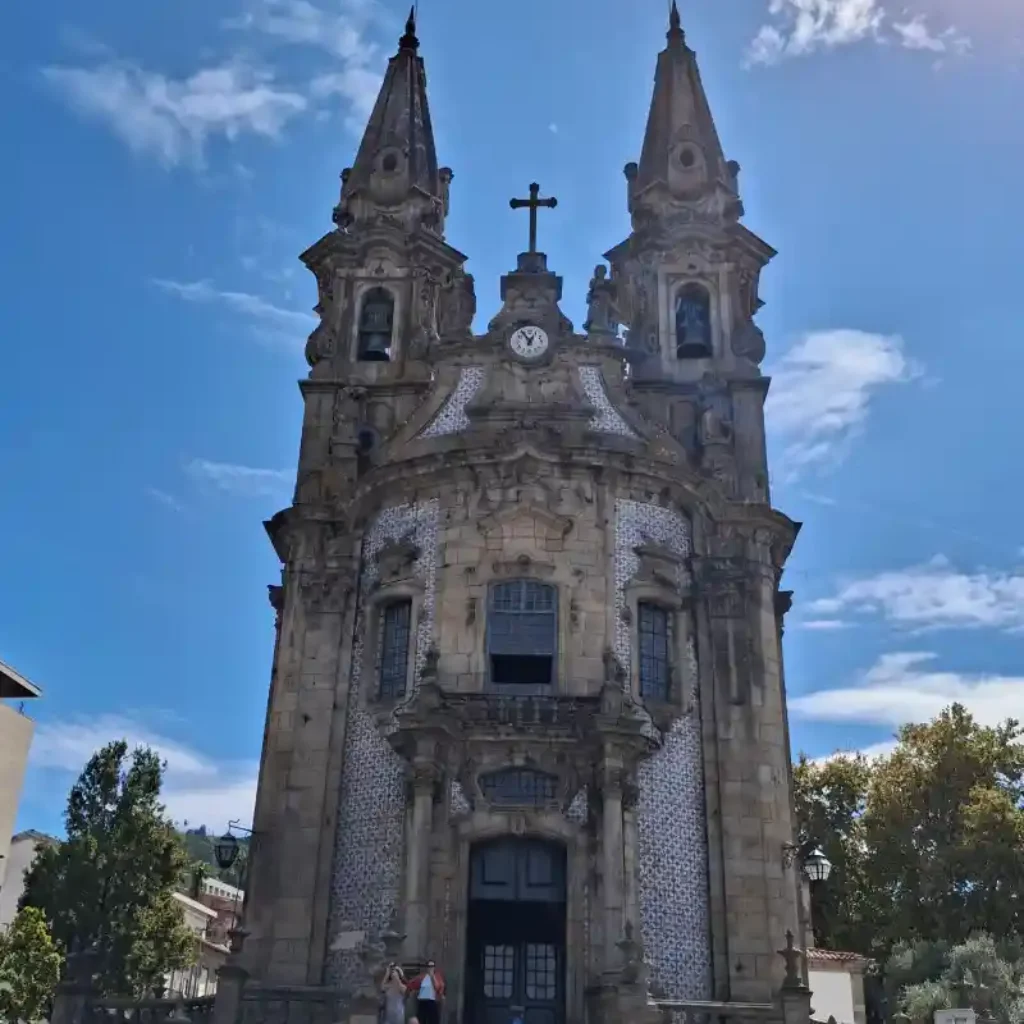
São Gualter Church or Igreja de São Gualter, sits at the end of Largo República do Brasil.
Built in the 18th century and finished in the 20th, it’s dedicated to Saint Walter, the city’s patron saint. The church has a twin-towered Baroque façade and a peaceful interior with gilded woodwork and traditional tile panels. Its location makes it a popular stop during the annual Festas Gualterianas in August, when processions and celebrations take over the street.
Even outside festival time, it’s worth the short walk from the historic centre for the view back toward the old town.
Built in the 18th century and finished in the 20th, it’s dedicated to Saint Walter, the city’s patron saint. The church has a twin-towered Baroque façade and a peaceful interior with gilded woodwork and traditional tile panels. Its location makes it a popular stop during the annual Festas Gualterianas in August, when processions and celebrations take over the street.
Even outside festival time, it’s worth the short walk from the historic centre for the view back toward the old town.
Historical Largo da Oliveira
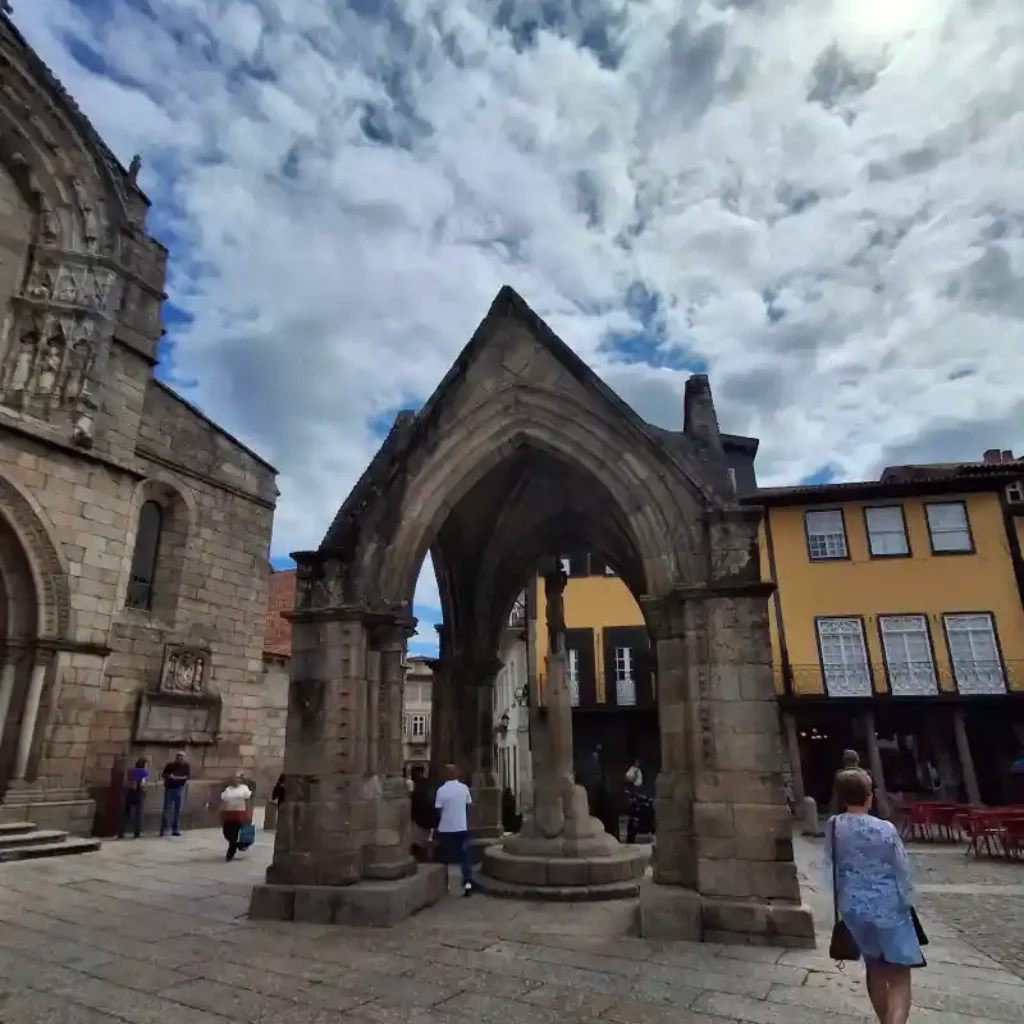
Largo da Oliveira is the heart of Guimarães’ historical centre and one of its most atmospheric squares in the whole of Portugal. It takes its name from the ancient olive tree that still stands there, said to symbolize peace.
The square is framed by medieval houses with wooden balconies and arcades, giving it a distinctly old-world feel. At its centre stands the Gothic Padrão do Salado, a 14th-century monument commemorating a battle victory.
On one side is the Church of Our Lady of Oliveira, once part of a monastery. Today, the square is lively with cafés and restaurants, making it a perfect place to linger.
The square is framed by medieval houses with wooden balconies and arcades, giving it a distinctly old-world feel. At its centre stands the Gothic Padrão do Salado, a 14th-century monument commemorating a battle victory.
On one side is the Church of Our Lady of Oliveira, once part of a monastery. Today, the square is lively with cafés and restaurants, making it a perfect place to linger.
Largo do Toural & Aqui Nasceu Portugal
Largo do Toural is one of Guimarães’ main squares and a lively place to start exploring.
Once a cattle market, it’s now a wide plaza framed by 17th and 18thcentury buildings with traditional tiled façades and plenty of cafés. Sit for a coffee here and watch the city go by before heading toward the old town.
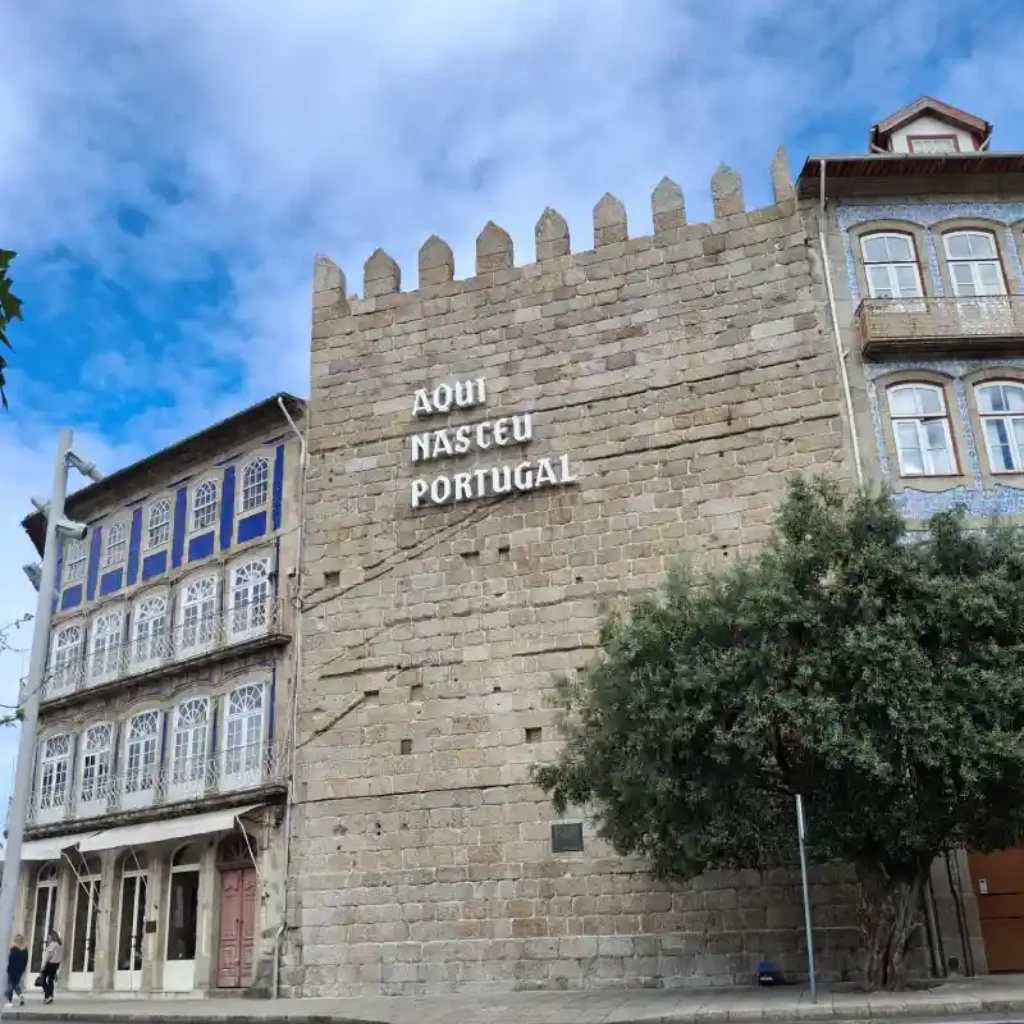
Nearby, on a section of the medieval walls, you’ll find the famous inscription “Aqui Nasceu Portugal – Portugal Was Born Here.” Simple but striking, it captures Guimarães’ importance as the birthplace of the nation of Portugal and is a must stop for a quick photo before you wander on.
Once a cattle market, it’s now a wide plaza framed by 17th and 18thcentury buildings with traditional tiled façades and plenty of cafés. Sit for a coffee here and watch the city go by before heading toward the old town.
Nearby, on a section of the medieval walls, you’ll find the famous inscription “Aqui Nasceu Portugal – Portugal Was Born Here.” Simple but striking, it captures Guimarães’ importance as the birthplace of the nation of Portugal and is a must stop for a quick photo before you wander on.
Praça de São Tiago
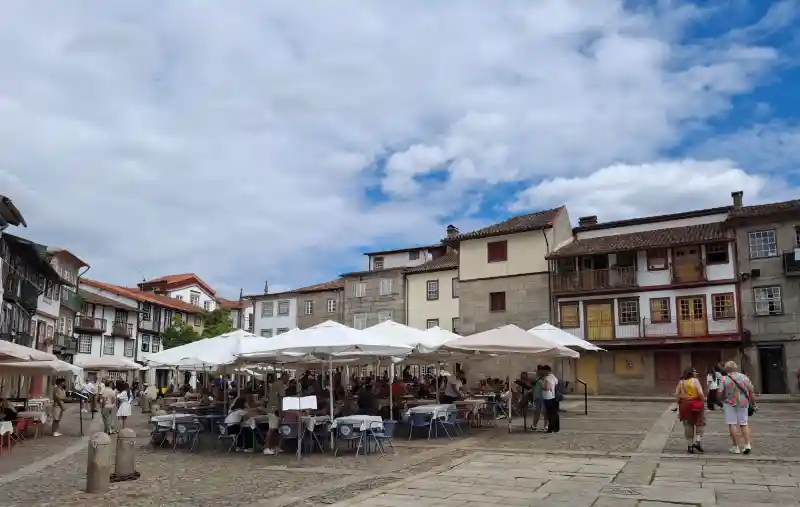
Praça de São Tiago is one of the most charming squares in Guimarães’ historic centre. According to tradition, the name comes from Saint James (São Tiago), whose image was brought here by pilgrims on the Camino de Santiago.
The square is framed by medieval houses with stone arcades and upper floors with wooden balconies, giving it a cozy, timeless feel.
During the day, it’s a quiet place to stroll or sit with a coffee, but in the evening it comes alive with locals and visitors filling its bars and restaurants. It’s the perfect spot to soak up Guimarães’ laid-back, lived-in atmosphere.
The square is framed by medieval houses with stone arcades and upper floors with wooden balconies, giving it a cozy, timeless feel.
During the day, it’s a quiet place to stroll or sit with a coffee, but in the evening it comes alive with locals and visitors filling its bars and restaurants. It’s the perfect spot to soak up Guimarães’ laid-back, lived-in atmosphere.
Guimarães Castle
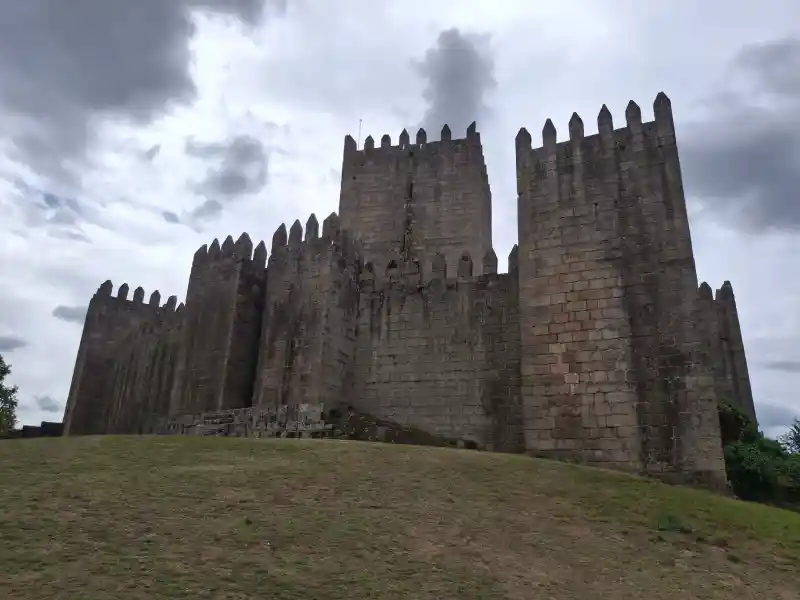
Guimarães Castle is one of the city’s most iconic landmarks and a symbol of Portugal’s beginnings. Built in the 10th century to defend the region from attacks, it later became the childhood home of Afonso Henriques, the first king of Portugal.
The castle has a simple but striking look: tall granite walls, seven towers, and a central keep rising above it all.
You can walk along parts of the walls and get sweeping views of the surrounding hills and town. It’s not a grand palace but a solid, atmospheric fortress that makes the country’s early history feel surprisingly close.
The castle has a simple but striking look: tall granite walls, seven towers, and a central keep rising above it all.
You can walk along parts of the walls and get sweeping views of the surrounding hills and town. It’s not a grand palace but a solid, atmospheric fortress that makes the country’s early history feel surprisingly close.
Igreja de São Miguel do Castelo
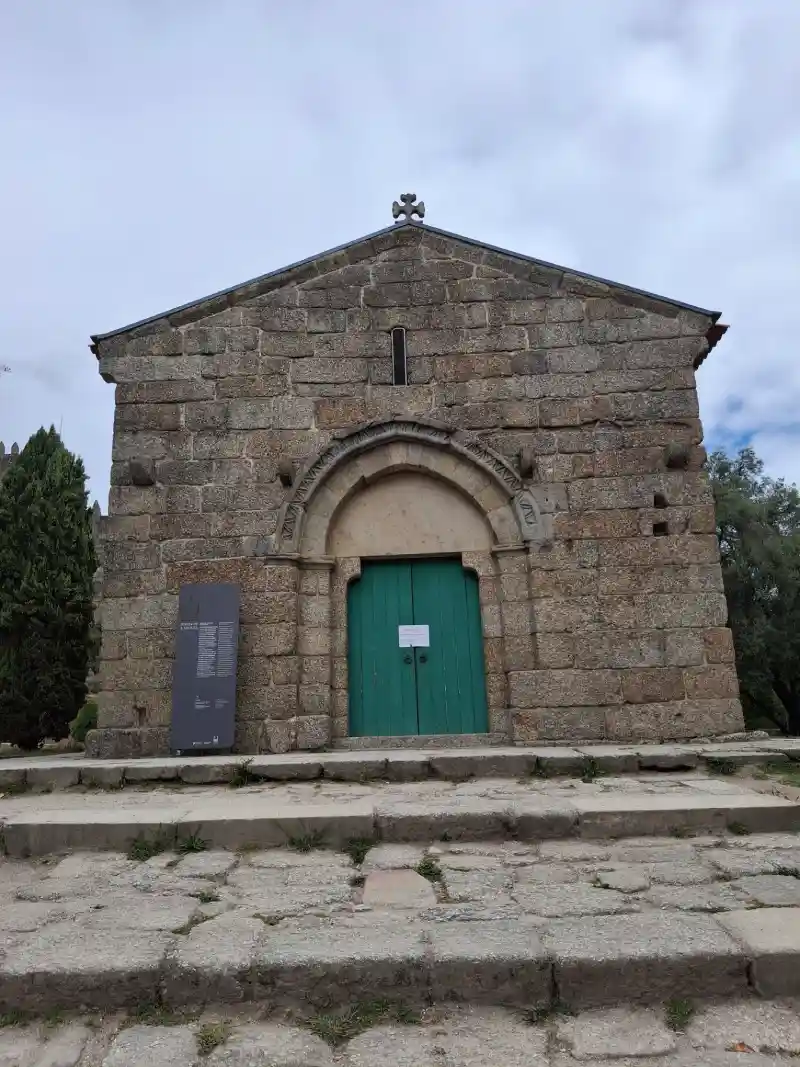
Church Of São Miguel do Castelo is a small, Romanesque chapel sitting just below Guimarães Castle and it’s easy to miss if you’re not looking for it.
Dating back to the 12th century, it’s famously known as the place where Afonso Henriques, Portugal’s first king, was baptized. The church is simple, with thick stone walls, a single nave, and a peaceful, understated interior. Outside, you’ll find old gravestones laid into the ground, adding to the sense of history.
Visiting it doesn’t take long, but it pairs perfectly with a stop at the castle and helps complete the story of Portugal’s beginnings.
Dating back to the 12th century, it’s famously known as the place where Afonso Henriques, Portugal’s first king, was baptized. The church is simple, with thick stone walls, a single nave, and a peaceful, understated interior. Outside, you’ll find old gravestones laid into the ground, adding to the sense of history.
Visiting it doesn’t take long, but it pairs perfectly with a stop at the castle and helps complete the story of Portugal’s beginnings.
Paço dos Duques
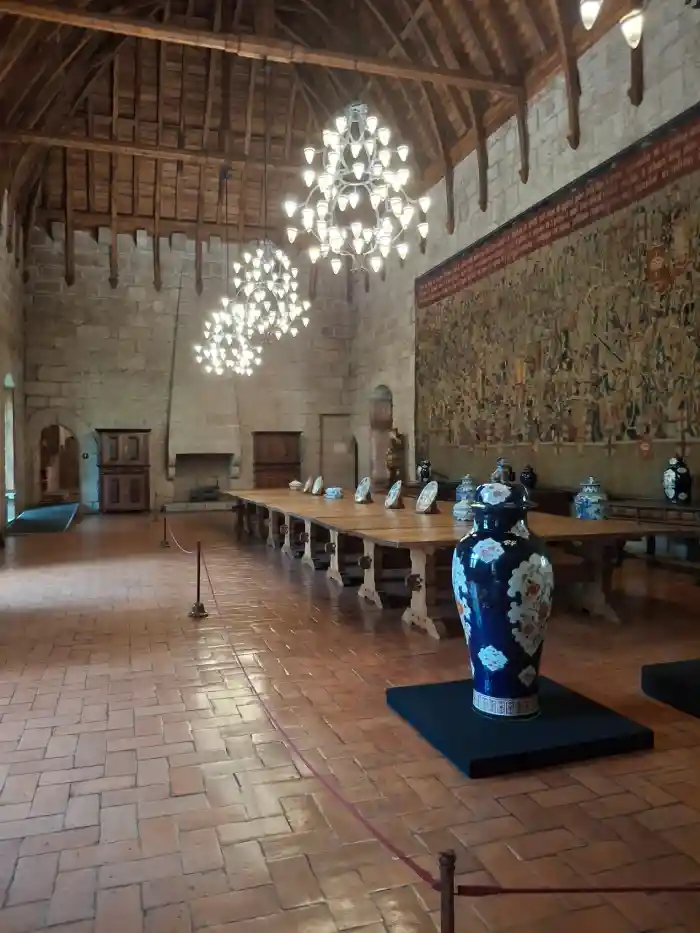
Paço dos Duques de Bragança, or the Palace of the Dukes of Braganza, is one of Guimarães’ most impressive landmarks. Built in the 15th century by Afonso, the first Duke of Braganza, it mixes medieval and early Renaissance architecture with its tall chimneys and fortified look.
Inside, the palace feels part museum, part noble residence, you can wander through grand halls, see tapestries, furniture, weapons, and even a small chapel.
The huge banquet hall is a highlight, with its exposed wooden ceiling and scale that shows the power of the dukes.
It’s a must-see for a deeper dive into Guimarães’ history.
Inside, the palace feels part museum, part noble residence, you can wander through grand halls, see tapestries, furniture, weapons, and even a small chapel.
The huge banquet hall is a highlight, with its exposed wooden ceiling and scale that shows the power of the dukes.
It’s a must-see for a deeper dive into Guimarães’ history.
Igreja de Nossa Senhora da Oliveira
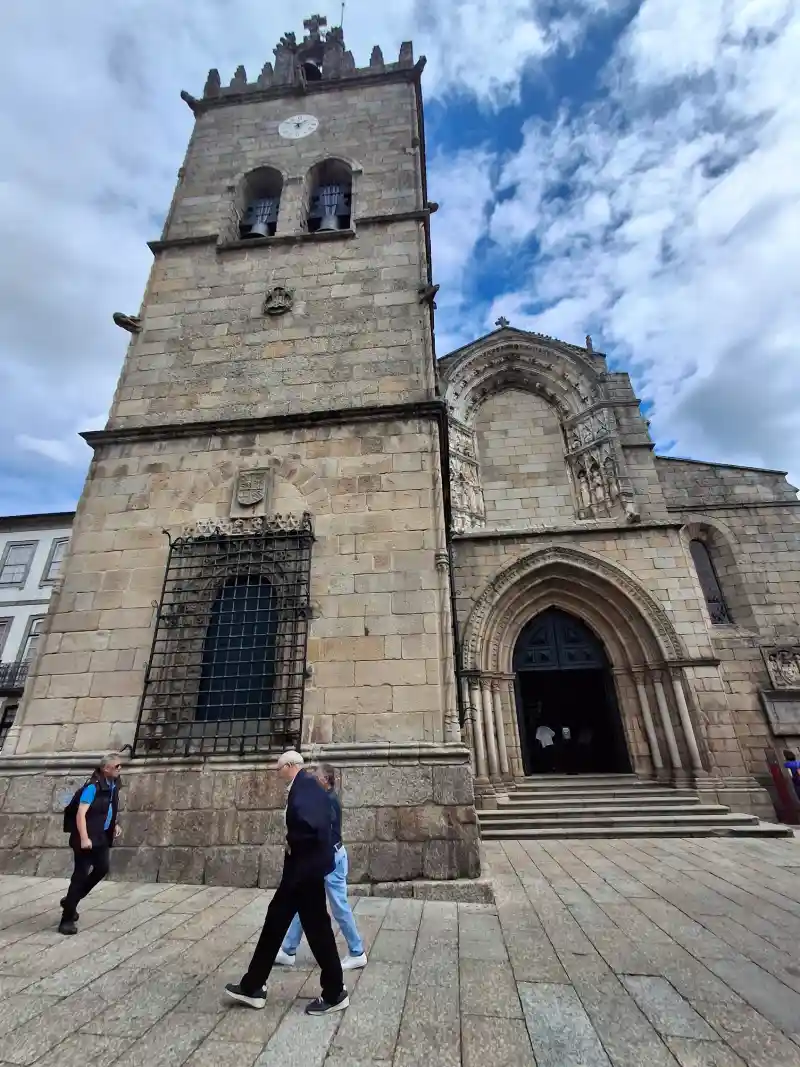
The Church of Our Lady of Oliveira (Igreja de Nossa Senhora da Oliveira) is one of the key landmarks in Guimarães’ historic centre, located right on Largo da Oliveira.
Originally founded as a monastery in the 10th century, it was rebuilt in Gothic style in the 14th century by King João I. Inside, you’ll find a mix of Gothic and Baroque details, including a striking gilded altarpiece and traditional azulejo tiles.
The church’s name, meaning “Our Lady of the Olive Tree,” ties to the square’s ancient olive tree, a local symbol of peace. It’s both a religious site and a piece of living history
Originally founded as a monastery in the 10th century, it was rebuilt in Gothic style in the 14th century by King João I. Inside, you’ll find a mix of Gothic and Baroque details, including a striking gilded altarpiece and traditional azulejo tiles.
The church’s name, meaning “Our Lady of the Olive Tree,” ties to the square’s ancient olive tree, a local symbol of peace. It’s both a religious site and a piece of living history
1 Night In Amarante:
Portugal’s Prettiest Little Secret
Tucked away in the green hills of northern Portugal, Amarante feels like the kind of place you stumble upon and instantly fall in love with. With cobbled lanes, a very cheeky pastry and a graceful stone bridge arching over the lazy Tâmega River.
Whether you’re here for a lazy weekend, a romantic escape or just a scenic stop on your Portuguese road trip, Amarante will steal your heart and probably convince you to stay a little longer than planned.
How To Get To Amarante
The drive is 40 mins from Guimarães taking the A11. There are no direct buses or trains so you will either need to drive or grab a Bolt.
Whether you’re here for a lazy weekend, a romantic escape or just a scenic stop on your Portuguese road trip, Amarante will steal your heart and probably convince you to stay a little longer than planned.
How To Get To Amarante
The drive is 40 mins from Guimarães taking the A11. There are no direct buses or trains so you will either need to drive or grab a Bolt.
Ponte de São Gonçalo
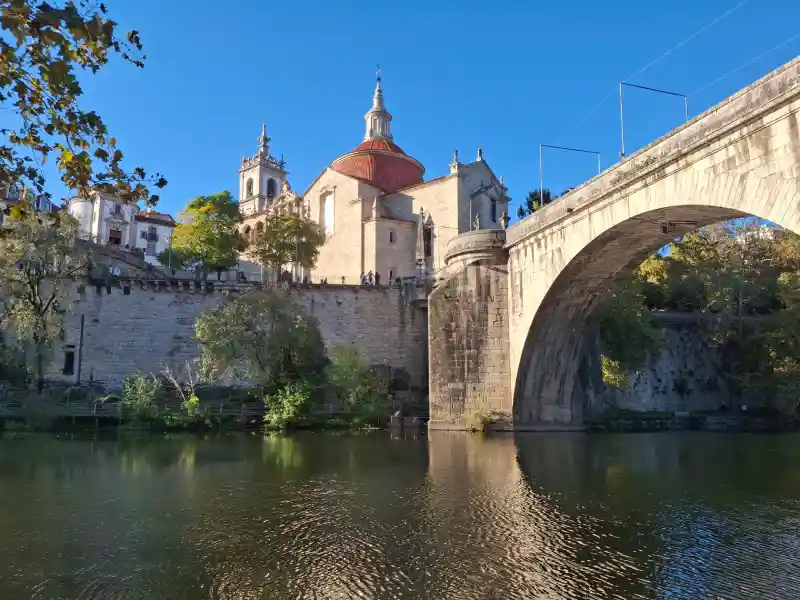
This elegant stone bridge stretches gracefully across the Tâmega River, perfectly framing the town’s pastel buildings and the striking São Gonçalo Church beside it. Built in the 18th century to replace an older medieval crossing, the bridge isn’t just beautiful, it’s steeped in stories.
Locals will tell you tales of battles fought here and miracles attributed to Saint Gonçalo, the town’s beloved patron.
But beyond the history, it’s simply a joy to stroll across. From the center of the bridge, you get postcard-perfect views of Amarante, especially at sunset. It’s the best place to pause, take a deep breath, and feel the rhythm of this charming riverside town.
Locals will tell you tales of battles fought here and miracles attributed to Saint Gonçalo, the town’s beloved patron.
But beyond the history, it’s simply a joy to stroll across. From the center of the bridge, you get postcard-perfect views of Amarante, especially at sunset. It’s the best place to pause, take a deep breath, and feel the rhythm of this charming riverside town.
Church Of São Gonçalo & former Monastery
Right beside the famous bridge stands the Church of São Gonçalo, Amarante’s pride and joy.
This 16th-century beauty is dedicated to the town’s patron saint, known for his miracles and some rather cheeky fertility legends that locals love to share with a wink.
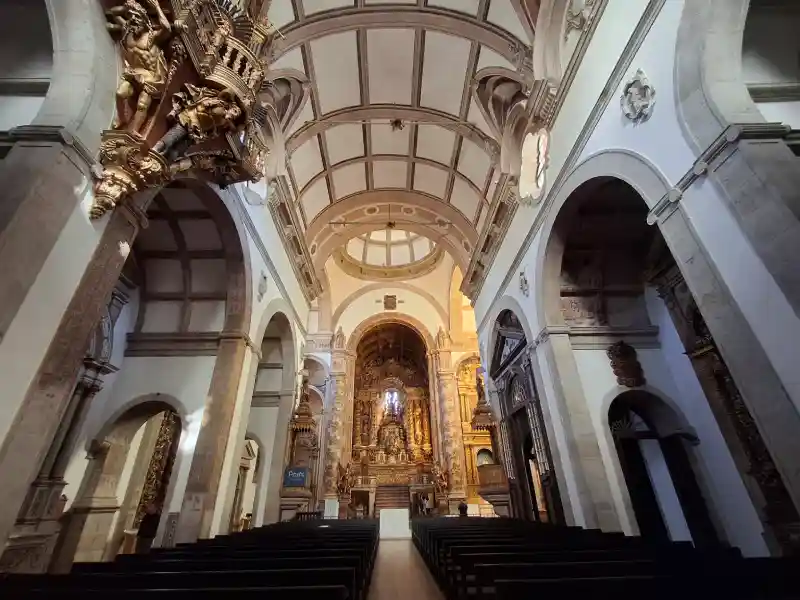
Step inside and you’ll find ornate Baroque details, gilded altars, and a peaceful cloister that once belonged to the adjoining monastery. It’s a place that feels both grand and intimate, where centuries of devotion meet everyday charm. Don’t forget to light a candle or make a wish for luck in love!
This 16th-century beauty is dedicated to the town’s patron saint, known for his miracles and some rather cheeky fertility legends that locals love to share with a wink.
Step inside and you’ll find ornate Baroque details, gilded altars, and a peaceful cloister that once belonged to the adjoining monastery. It’s a place that feels both grand and intimate, where centuries of devotion meet everyday charm. Don’t forget to light a candle or make a wish for luck in love!
Looking For Love!
Has your love life’s been gathering dust? Then head straight to the Church of São Gonçalo.
São Gonçalo, the town’s patron saint, is known locally as a sort of divine matchmaker. Legend has it that if you make a wish near the tomb or his statue, you might just find yourself lucky in love. Some say you’re meant to pull the rope on his statue, others that you make a wish at his tomb. Either way, have your wish ready, keep it simple, heartfelt and maybe avoid naming names.
So if you’re single or just fancy a bit of old-fashioned romance, step inside the church, touch the tomb and whisper your wish. Who knows, São Gonçalo might just be the best wingman you’ll ever have.
São Gonçalo, the town’s patron saint, is known locally as a sort of divine matchmaker. Legend has it that if you make a wish near the tomb or his statue, you might just find yourself lucky in love. Some say you’re meant to pull the rope on his statue, others that you make a wish at his tomb. Either way, have your wish ready, keep it simple, heartfelt and maybe avoid naming names.
So if you’re single or just fancy a bit of old-fashioned romance, step inside the church, touch the tomb and whisper your wish. Who knows, São Gonçalo might just be the best wingman you’ll ever have.
River Walk
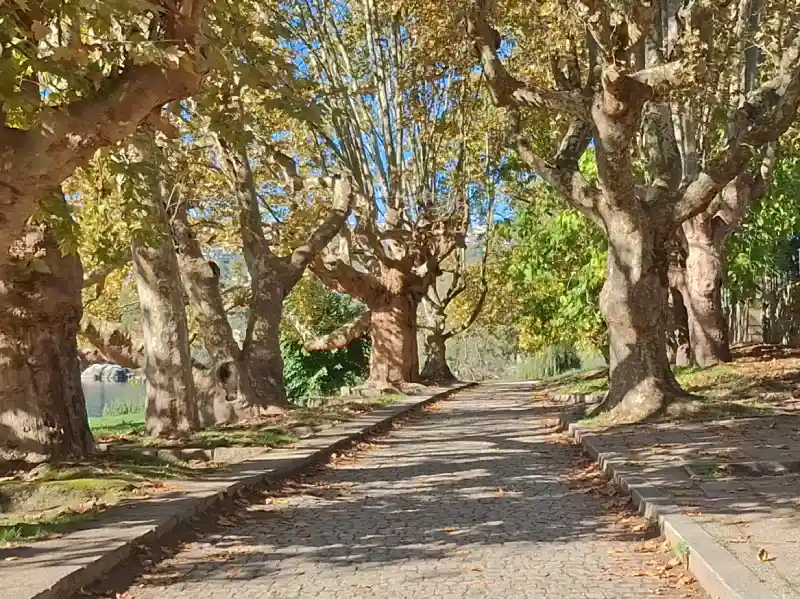
One of the simplest yet most magical things to do in Amarante is to take a leisurely stroll along the Tâmega River.
The gentle sound of the water, the reflection of the pastel houses and the occasional duck gliding by it’s pure serenity. The riverside path winds past charming cafés, leafy trees and little benches perfect for people-watching (or pastry-eating).
In summer, you might even spot locals cooling off with a swim or paddling by in canoes. Whether you’re after romance, relaxation or just a great photo, the Amarante river walk delivers in spades.
The gentle sound of the water, the reflection of the pastel houses and the occasional duck gliding by it’s pure serenity. The riverside path winds past charming cafés, leafy trees and little benches perfect for people-watching (or pastry-eating).
In summer, you might even spot locals cooling off with a swim or paddling by in canoes. Whether you’re after romance, relaxation or just a great photo, the Amarante river walk delivers in spades.
Museum Amadeo de Souza‑Cardoso
Art lovers, rejoice! The Museu Amadeo de Souza-Cardoso is one of Amarante’s coolest surprises.
Housed in a former convent right next to the São Gonçalo Church, this museum celebrates the life and work of Amarante’s own modernist master, Amadeo de Souza-Cardoso often called Portugal’s Picasso.
Inside, you’ll find bold, colourful works that feel way ahead of their time, plus rotating exhibits from other Portuguese artists.
Housed in a former convent right next to the São Gonçalo Church, this museum celebrates the life and work of Amarante’s own modernist master, Amadeo de Souza-Cardoso often called Portugal’s Picasso.
Inside, you’ll find bold, colourful works that feel way ahead of their time, plus rotating exhibits from other Portuguese artists.

Confeitaria da Ponte
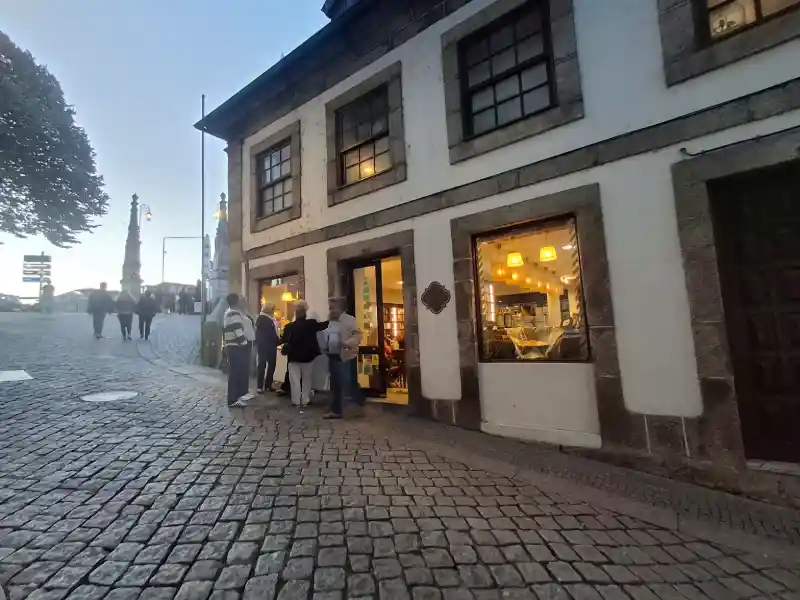
No visit to Amarante is complete without a stop at Confeitaria da Ponte, the town’s most beloved pastry shop and café.
Perched right beside the São Gonçalo Bridge, it offers front-row views of the river best enjoyed with a coffee and something sweet (or two… no judgment here).
This historic bakery is famous for its São Gonçalo cakes, said to bring luck in love, along with irresistible almond pastries and flaky delights that seem to taste even better in the sunshine. Whether you pop in for breakfast or a lazy afternoon treat, Confeitaria da Ponte is pure Amarante magic.
Perched right beside the São Gonçalo Bridge, it offers front-row views of the river best enjoyed with a coffee and something sweet (or two… no judgment here).
This historic bakery is famous for its São Gonçalo cakes, said to bring luck in love, along with irresistible almond pastries and flaky delights that seem to taste even better in the sunshine. Whether you pop in for breakfast or a lazy afternoon treat, Confeitaria da Ponte is pure Amarante magic.
2 Nights Régua and Pinhão, Douro Valley
Located in Portugal’s stunning Douro Valley, Régua and Pinhão are wine-lover heaven! With scenic river cruises, epic vineyard tours, delicious port tastings, and jaw-dropping views around every hill. Whether you’re sipping wine or snapping pics, these charming towns promise an unforgettable escape into the heart of wine country magic.
How To Get To Régua and Pinhão
Take the N101 so you can the beauty of the Douro valley. There are no direct buses or trains so you will either need to drive or grab a Bolt.
How To Get To Régua and Pinhão
Take the N101 so you can the beauty of the Douro valley. There are no direct buses or trains so you will either need to drive or grab a Bolt.
Bridges in Régua
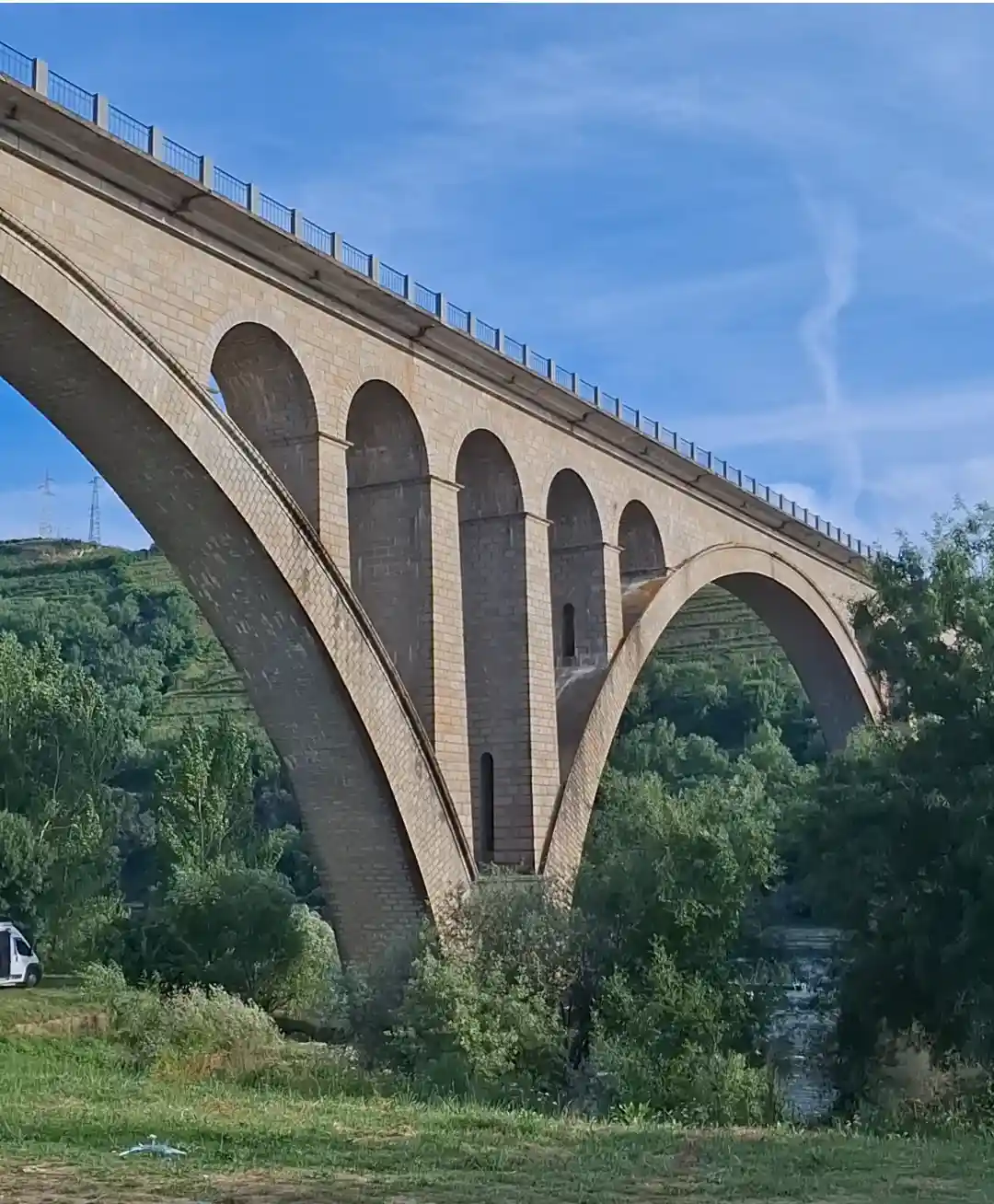
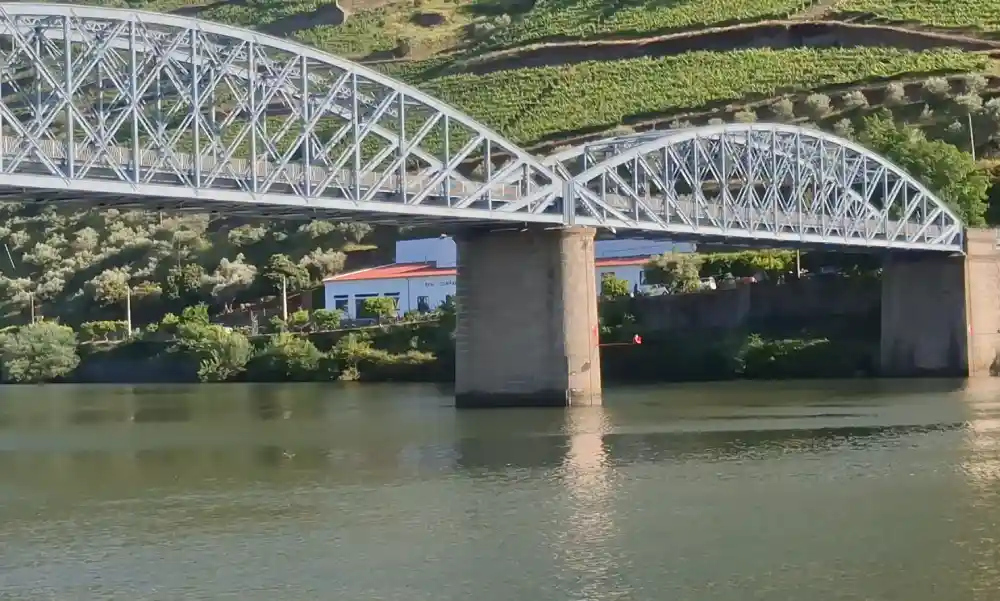
Peso da Régua has three cool bridges that each tell a story. The old metal pedestrian bridge offers great river views, while the railway bridge, now for cars, connects Régua to Lamego. The modern Miguel Torga Bridge soars high above, adding a striking touch to the valley’s landscape.
The Ponte Pedonal Metálica, completed in 1872 is the pedestrian walkway.
The Ponte Ferroviária da Régua, built in 1934 is the railway bridge
The Ponte Miguel Torga, completed in 1997, is the modern traffic bridge.
The Ponte Pedonal Metálica, completed in 1872 is the pedestrian walkway.
The Ponte Ferroviária da Régua, built in 1934 is the railway bridge
The Ponte Miguel Torga, completed in 1997, is the modern traffic bridge.
Port Museum In Régua
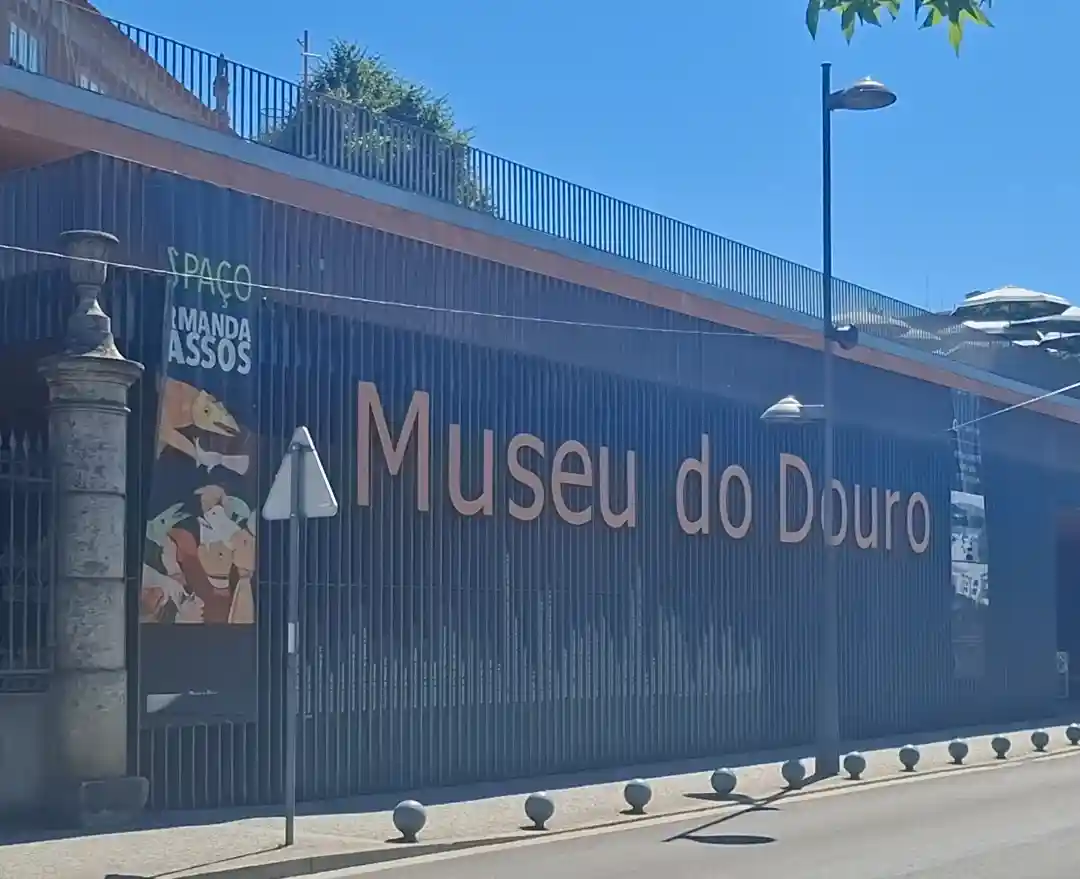
The Port Wine Museum in Régua is a must-visit for wine lovers. It’s a modern space that dives into the history and production of port, with interactive exhibits and tastings.
This is a really nice museum about the history of the region and the wine making tradition. It’s very informative and there’s a lot to learn about the region and its wine. Entry also includes a glass of wine, which is a very nice ending :).
A perfect spot to learn about the Douro’s famous export while enjoying some great views of the river.
Address: Edifício Museu do Douro, R. do Marquês de Pombal, 5050-282 Peso da Régua
Cost: 9 Euros
This is a really nice museum about the history of the region and the wine making tradition. It’s very informative and there’s a lot to learn about the region and its wine. Entry also includes a glass of wine, which is a very nice ending :).
A perfect spot to learn about the Douro’s famous export while enjoying some great views of the river.
Address: Edifício Museu do Douro, R. do Marquês de Pombal, 5050-282 Peso da Régua
Cost: 9 Euros
River Walk in Régua
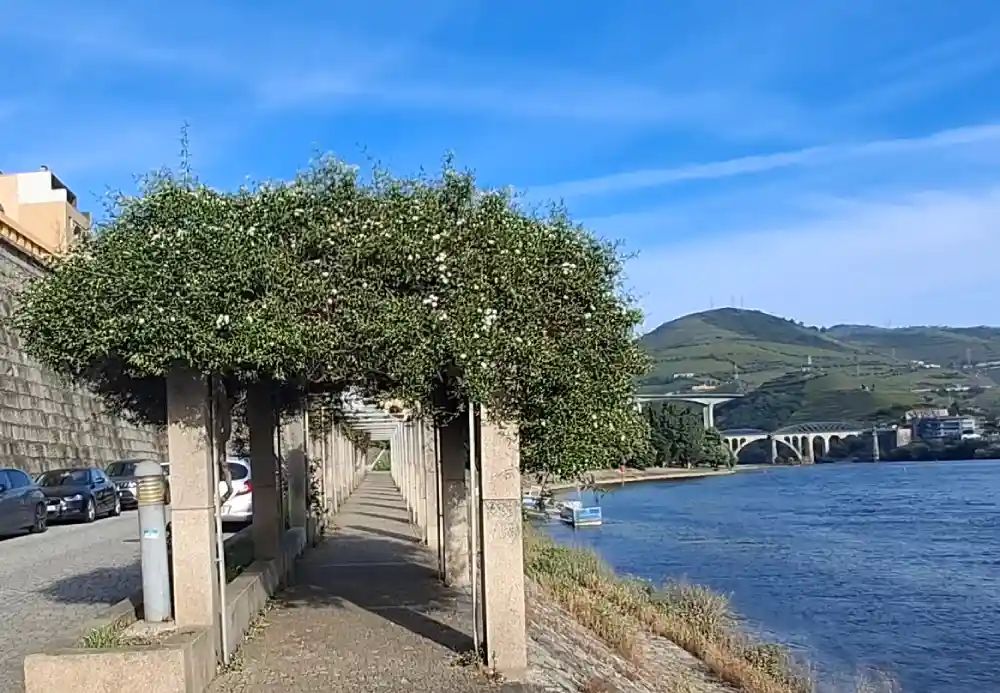
The river walk in Régua is a peaceful way to enjoy the Douro’s charm. Stroll along the waterfront, watch the boats drift by, and take in vineyard-covered hills in the distance. It’s a great spot for a relaxing break, a quick photo, or a quiet moment by the water.
A222 To Pinhão
The A222 road from Pinhão to Régua is a scenic drive winding through the heart of the Douro Valley. Along the way, you’ll pass endless vineyards, charming villages, and stunning river views. It’s a perfect route to explore the region’s beauty at your own pace, with plenty of spots to stop and soak it all in.
Its part of the Romanesque Route (Rota do Românico) is a cultural and heritage itinerary in northern Portugal that includes part of the Douro Valley region.
Its part of the Romanesque Route (Rota do Românico) is a cultural and heritage itinerary in northern Portugal that includes part of the Douro Valley region.
Port Tasting in Pinhão
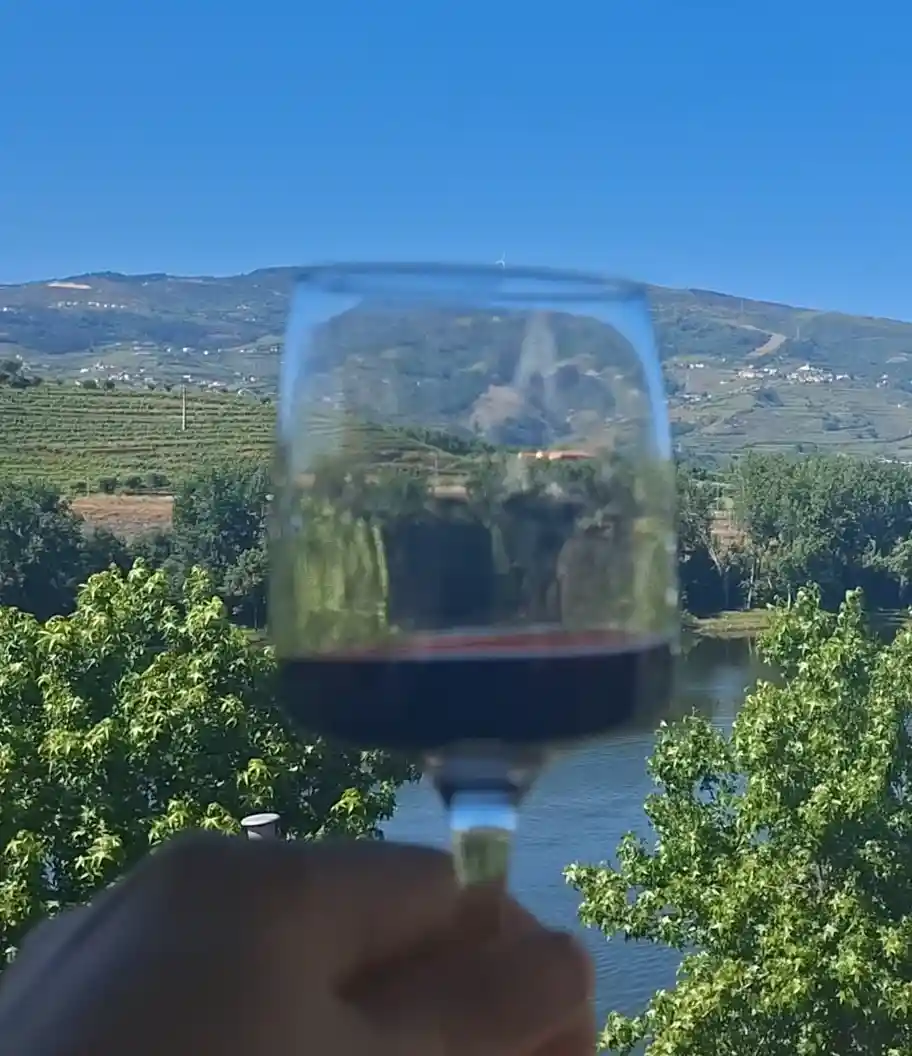
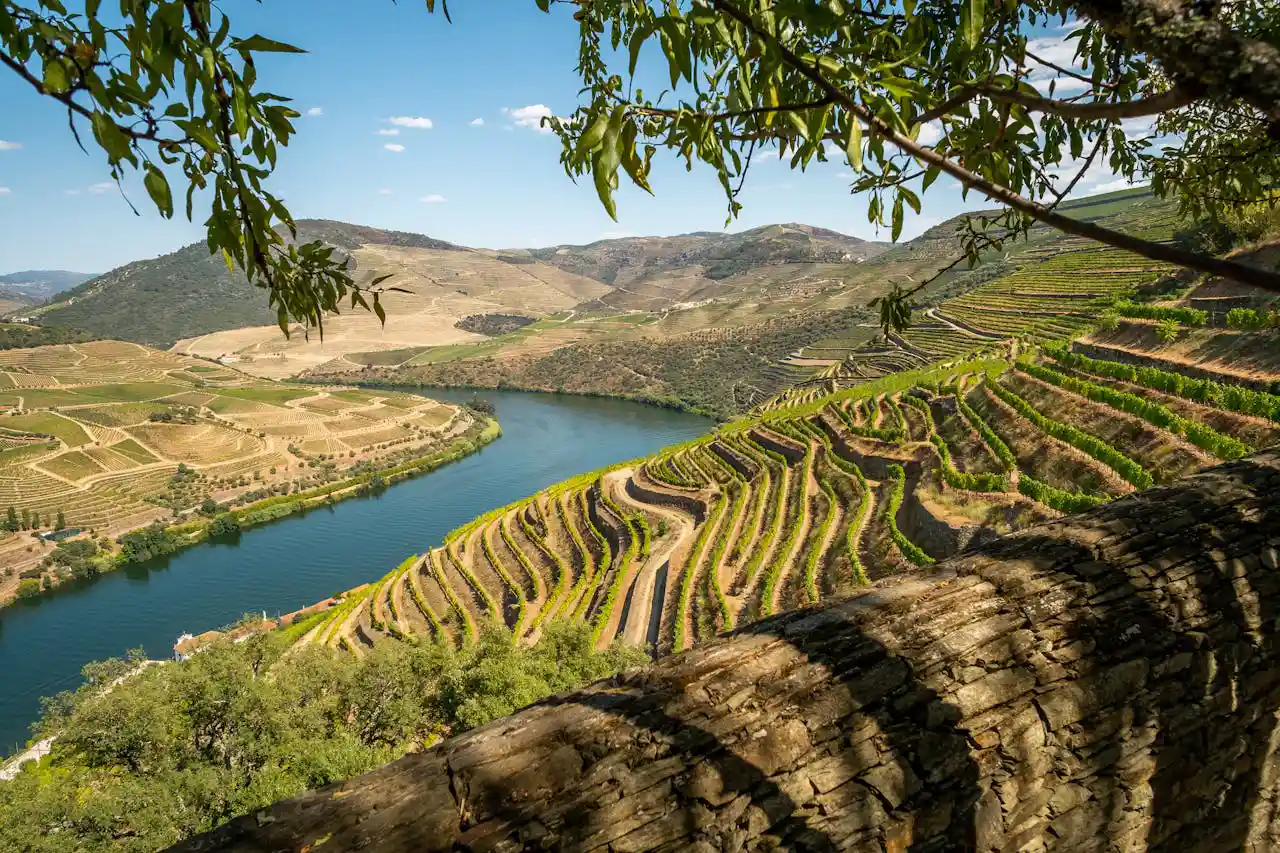
When you find yourself in the Douro Valley, especially around Pinhão, you have to go port tasting. Honestly, even if you weren’t planning on drinking anything, the landscape alone feels like a reward.
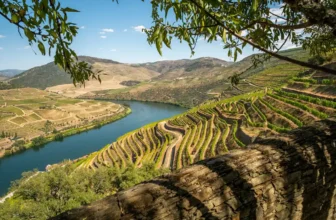
The hillsides are carved into dramatic terraces covered in vines, stacked so neatly it almost feels unreal and the Douro River just glides through the middle of it all.
Everything in the Douro moves at this lovely, slow pace. Tastings never feel rushed or formal. You don’t need to know a single thing about wine, people here genuinely enjoy sharing what they do, and they make it easy to just relax and enjoy the moment.
If you love good views, good stories, and good port, Pinhão is one of those places you end up remembering long after you’ve left.
The hillsides are carved into dramatic terraces covered in vines, stacked so neatly it almost feels unreal and the Douro River just glides through the middle of it all.
Everything in the Douro moves at this lovely, slow pace. Tastings never feel rushed or formal. You don’t need to know a single thing about wine, people here genuinely enjoy sharing what they do, and they make it easy to just relax and enjoy the moment.
If you love good views, good stories, and good port, Pinhão is one of those places you end up remembering long after you’ve left.
Quinta do Bomfim
Owned by the Symington family, this estate offers guided tours, tastings on a terrace overlooking the Douro River, and insights into five generations of winemaking.
Address: Largo do Videira, 5085-060 Pinhão, Portugal
Owned by the Symington family, this estate offers guided tours, tastings on a terrace overlooking the Douro River, and insights into five generations of winemaking.
Address: Largo do Videira, 5085-060 Pinhão, Portugal
Quinta da Roêda
(Croft Port)
This estate, managed by Croft Port, offers guided walking tours through the vineyards, tastings of renowned port wines and you can tread grapes during harvest season.
Address: 5085-036 Pinhão, Portugal
(Croft Port)
This estate, managed by Croft Port, offers guided walking tours through the vineyards, tastings of renowned port wines and you can tread grapes during harvest season.
Address: 5085-036 Pinhão, Portugal
Quinta das Carvalhas
Operated by Real Companhia Velha, this estate offers thematic wine tastings, vineyard walks and panoramic views from the “Casa Redonda” at the top of the property
Address: 5085-034 Pinhão, Portugal
Operated by Real Companhia Velha, this estate offers thematic wine tastings, vineyard walks and panoramic views from the “Casa Redonda” at the top of the property
Address: 5085-034 Pinhão, Portugal
Rabelo Boat River Tour
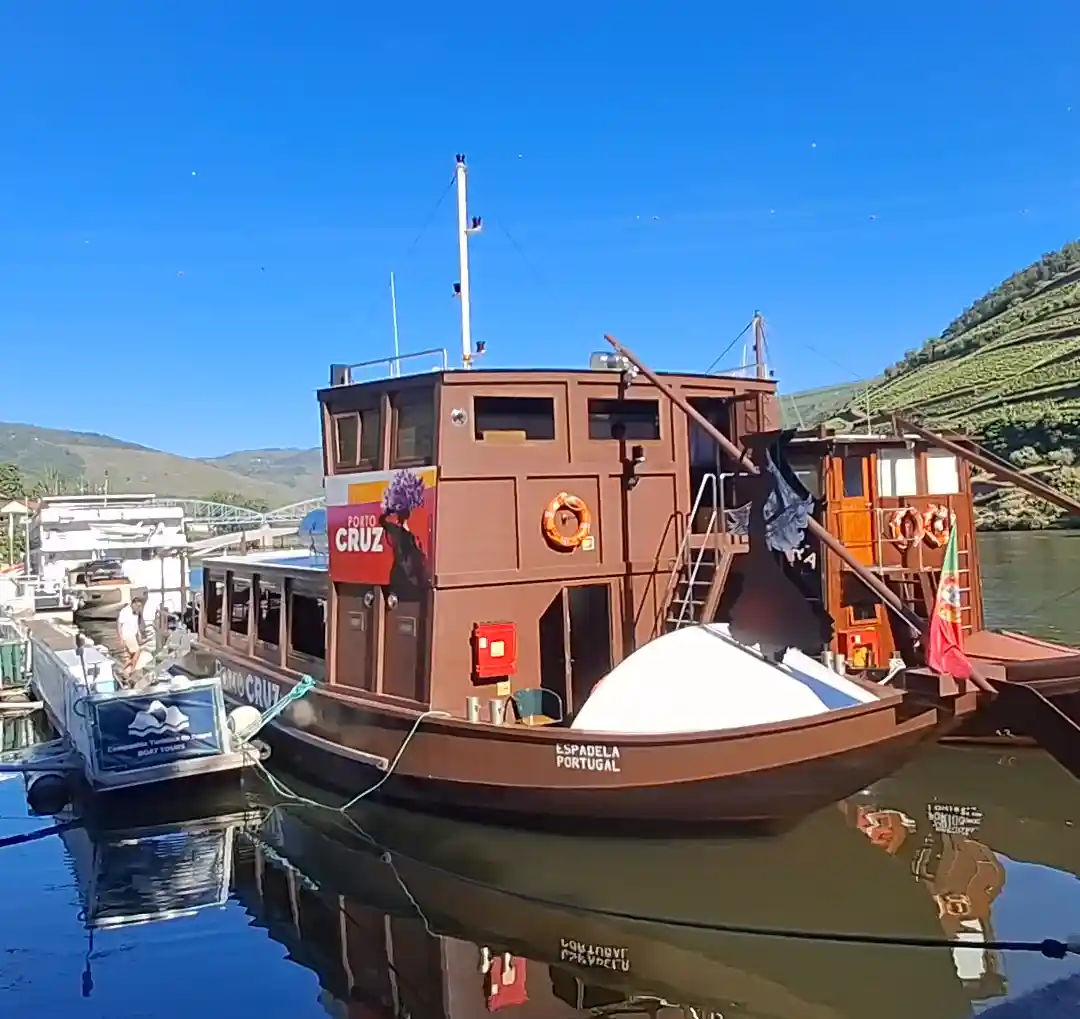
Taking a Rabelo boat tour in Pinhão is one of the best ways to soak in the Douro Valley’s beauty. These traditional wooden boats were once used to transport barrels of port wine downriver to Porto. Today, they carry curious travelers upriver for a peaceful ride through vineyard-covered hills and quiet, postcard-worthy scenery.
Tours usually last around an hour, which is just enough time to unwind, snap a few photos and take in the slow rhythm of the Douro. There’s no guide droning on over a loudspeaker, just the sound of water, the occasional splash of a fish, and the gentle hum of the boat engine.
Some tours include a complimentary glass of port, which feels perfectly appropriate.
Departures leave regularly from the dock near Pinhão’s train station, and no advanced planning is needed, just show up, buy a ticket and hop on. It’s simple, scenic, and a great break from walking or wine tasting. Whether you’re solo or with a group, a Rabelo cruise adds a calm, classic touch to your day in the Dour
Tours usually last around an hour, which is just enough time to unwind, snap a few photos and take in the slow rhythm of the Douro. There’s no guide droning on over a loudspeaker, just the sound of water, the occasional splash of a fish, and the gentle hum of the boat engine.
Some tours include a complimentary glass of port, which feels perfectly appropriate.
Departures leave regularly from the dock near Pinhão’s train station, and no advanced planning is needed, just show up, buy a ticket and hop on. It’s simple, scenic, and a great break from walking or wine tasting. Whether you’re solo or with a group, a Rabelo cruise adds a calm, classic touch to your day in the Dour
Hiking in Pinhão
Hiking in Pinhão is a great way to experience the Douro Valley beyond the vineyards and river views. Several well-marked trails wind through terraced hills, olive groves, and tiny villages, offering quiet paths and stunning panoramas. One popular route is the São Cristóvão do Douro trail, a moderate loop with sweeping views of the valley and the Douro River below. You’ll likely pass vineyard workers, old stone walls, and the occasional donkey. Best to start early, wear proper shoes, and bring water, especially in summer because it is hot. It’s peaceful, scenic, and gives you a true feel for the region.
1 Night In Lamego
In this charming little city tucked into the Douro Valley, everywhere you turn there’s something beautiful or historic waiting for you. It’s the kind of place where you can spend a whole afternoon just strolling around, discovering things as you go. There’s honestly more to do in Lamego than you’d expect, and it’s one of those towns that sticks with you long after you’ve moved on.There are many things to do in Lamego.
How To Get To Lamego
Take the N222 so you can the beauty of the Douro valley, for 42 minutes. There are no direct buses or trains so you will either need to drive or grab a Bolt.
How To Get To Lamego
Take the N222 so you can the beauty of the Douro valley, for 42 minutes. There are no direct buses or trains so you will either need to drive or grab a Bolt.
Stairs of Nossa Senhora Dos Remédios
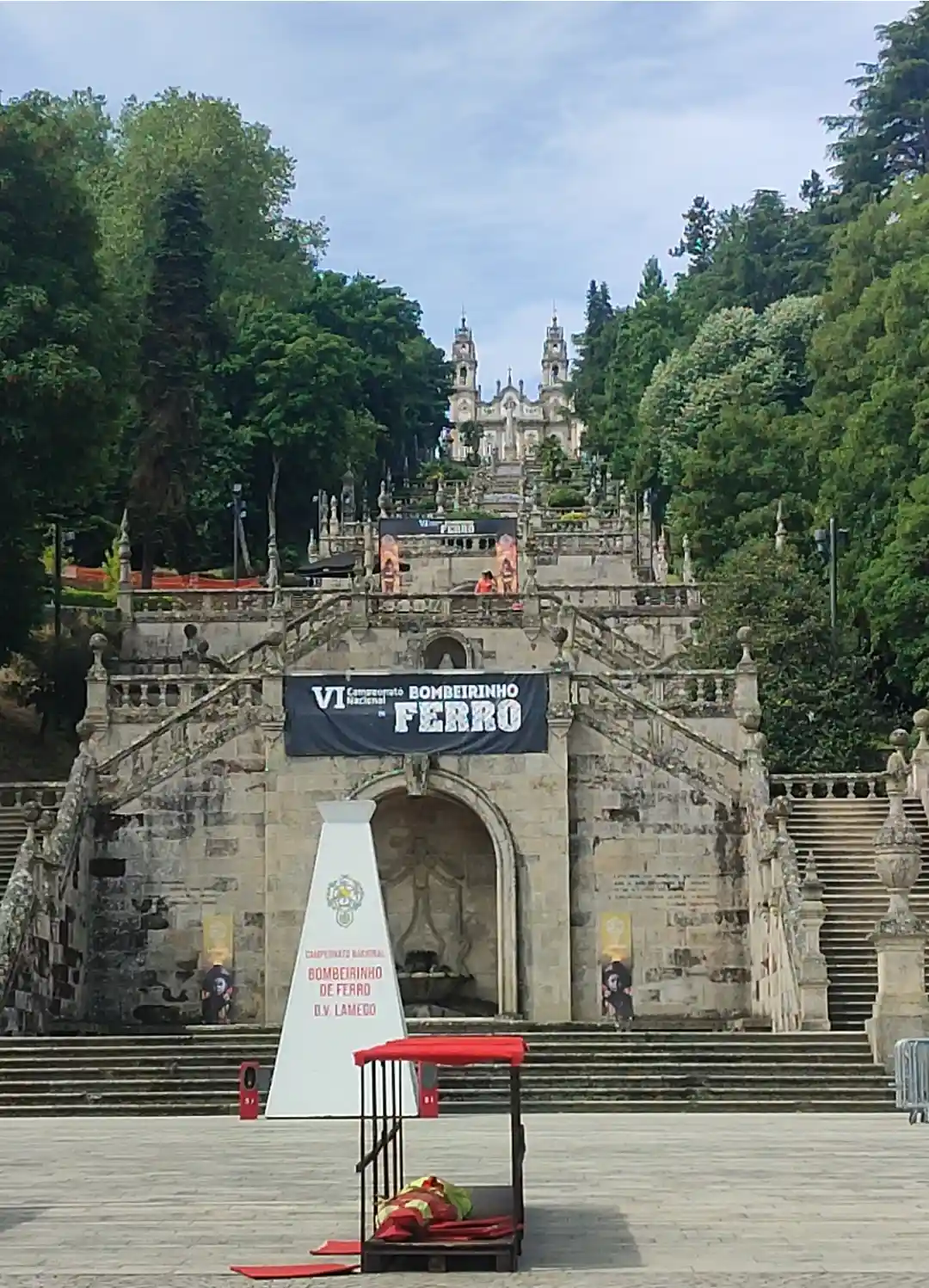
The Stairs of Nossa Senhora dos Remédios aren’t just step, they are a full on fitness experience. With nearly 700 ornate steps zigzagging their way up this huge green hill, each level giving an insight into history and epic leg workouts. But don’t worry, this climb rewards you at every turn.
Built between the late 18th and early 20th centuries, the staircase is a Baroque masterpiece, decked out with fountains, statues and the beautiful intricate azulejo tiles. Take your time climbing this master piece, as every landing tells a story and gives you a breather. Locals say it’s a spiritual journey and whether you’re here for the views or the vibes, it definitely feels like something special.
So lace up your walking shoes, bring your camera and get climbing.
Built between the late 18th and early 20th centuries, the staircase is a Baroque masterpiece, decked out with fountains, statues and the beautiful intricate azulejo tiles. Take your time climbing this master piece, as every landing tells a story and gives you a breather. Locals say it’s a spiritual journey and whether you’re here for the views or the vibes, it definitely feels like something special.
So lace up your walking shoes, bring your camera and get climbing.
Pátio dos Reis
Tucked halfway up the iconic staircase of Nossa Senhora dos Remédios in Lamego, the Pátio dos Reis (Courtyard of the Kings) is where art, history and a touch of royal flair collide.
Lined with statues of the biblical kings of Judah, it’s where stone and spirit meet in perfect harmony. The kings, looking regal and slightly contemplative, stand watch over the city and the pilgrims making their way up the hill. Behind them, the famous azulejos (those beautiful blue-and-white tiles) tell stories that stretch back centuries.
So pause, take it all in and maybe give a nod to the kings, they’ve been holding this pose for a few hundred years, after all.
Lined with statues of the biblical kings of Judah, it’s where stone and spirit meet in perfect harmony. The kings, looking regal and slightly contemplative, stand watch over the city and the pilgrims making their way up the hill. Behind them, the famous azulejos (those beautiful blue-and-white tiles) tell stories that stretch back centuries.
So pause, take it all in and maybe give a nod to the kings, they’ve been holding this pose for a few hundred years, after all.
Sanctuary of Nossa Senhora Dos Remédios
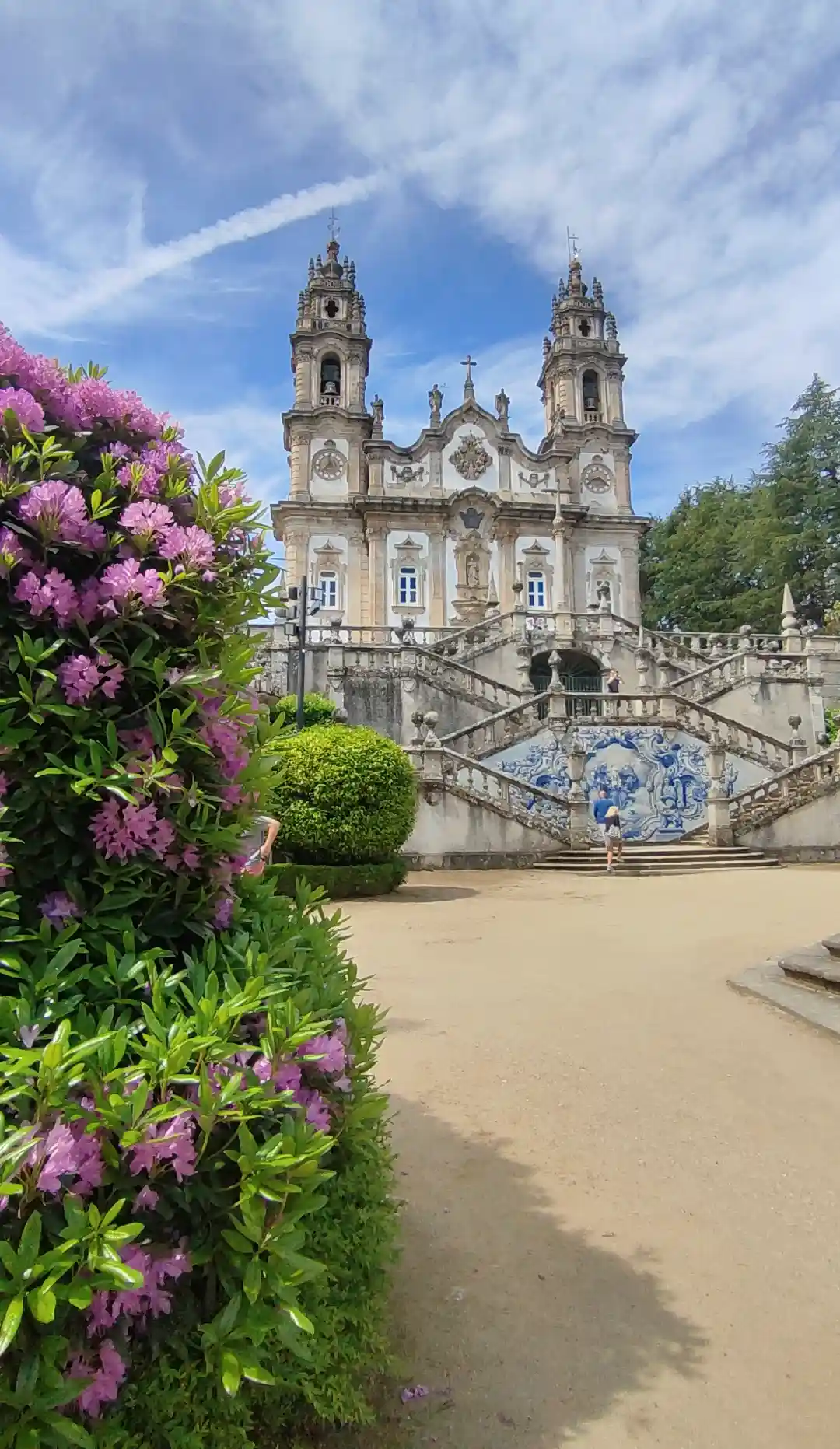
Perched like a crown above the city of Lamego, the Sanctuary of Nossa Senhora dos Remédios is a showstopper in stone. After conquering the 686 ornate steps of the monumental staircase (trust us, your calves will remember), you’re rewarded with a sanctuary that’s both breathtaking and deeply serene.
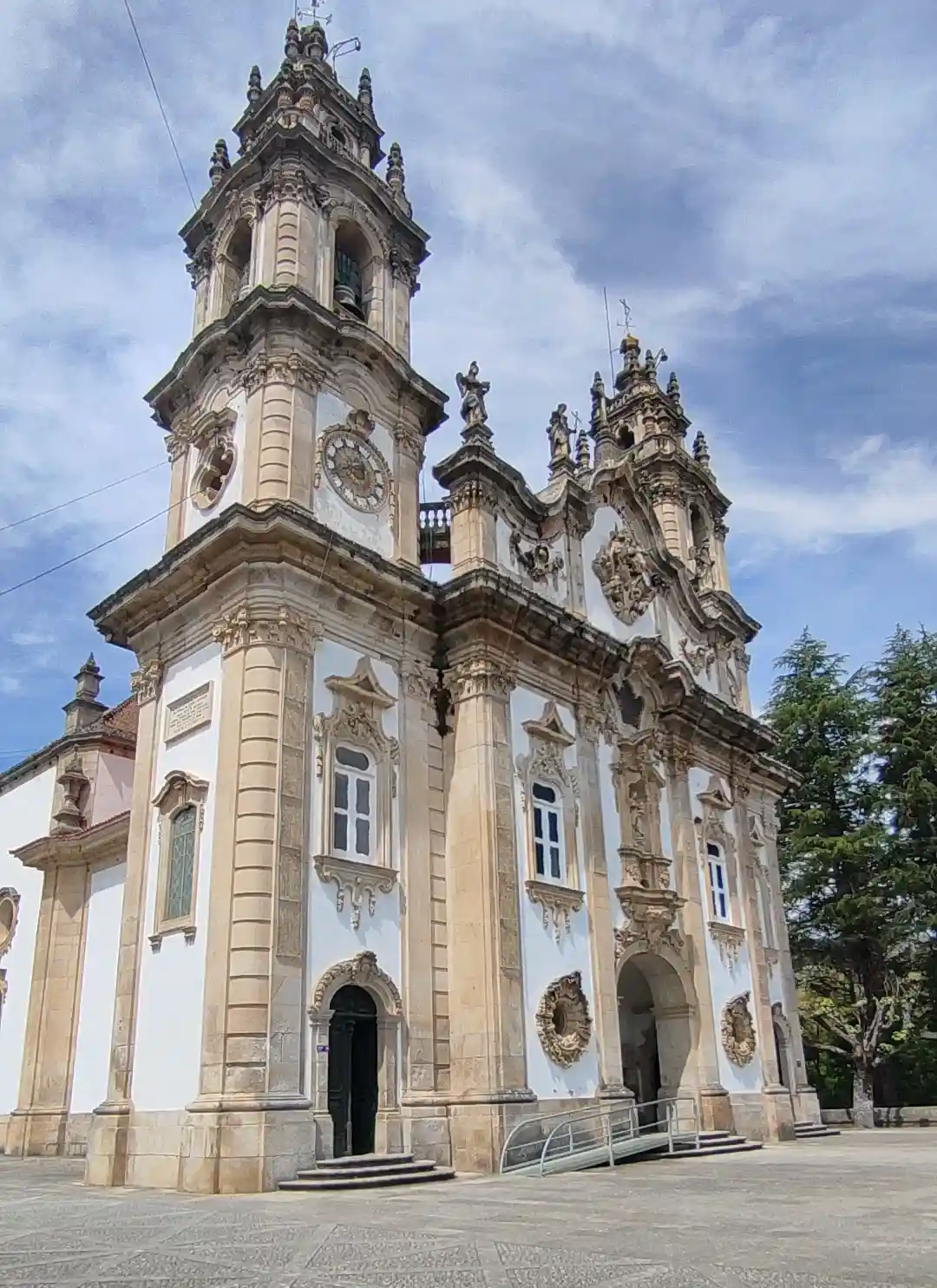
Construction began in 1750 and stretched well into the 20th century, blending Baroque and Rococo styles into a ornate silhouette framed by twin bell towers. The white façade practically glows against the surrounding greenery, while the richly decorated interior of gilded altars, detailed frescoes and intricate woodwork, invites hushed respectful awe.
Whether you’re here for the faith, the festival or just the jaw-dropping view over the Douro Valley, the Sanctuary of Nossa Senhora dos Remédios offers a moment of stillness, splendor, and a little bit of soul-soaring magic at the top of the world.
Visiting Hours
Monday–Saturday: 08:30–12:30 & 13:30–16:30
Sunday: 08:30–12:30 & 13:30–18:00
Construction began in 1750 and stretched well into the 20th century, blending Baroque and Rococo styles into a ornate silhouette framed by twin bell towers. The white façade practically glows against the surrounding greenery, while the richly decorated interior of gilded altars, detailed frescoes and intricate woodwork, invites hushed respectful awe.
Whether you’re here for the faith, the festival or just the jaw-dropping view over the Douro Valley, the Sanctuary of Nossa Senhora dos Remédios offers a moment of stillness, splendor, and a little bit of soul-soaring magic at the top of the world.
Visiting Hours
Monday–Saturday: 08:30–12:30 & 13:30–16:30
Sunday: 08:30–12:30 & 13:30–18:00
Gardens of Nossa Senhora Dos Remédios
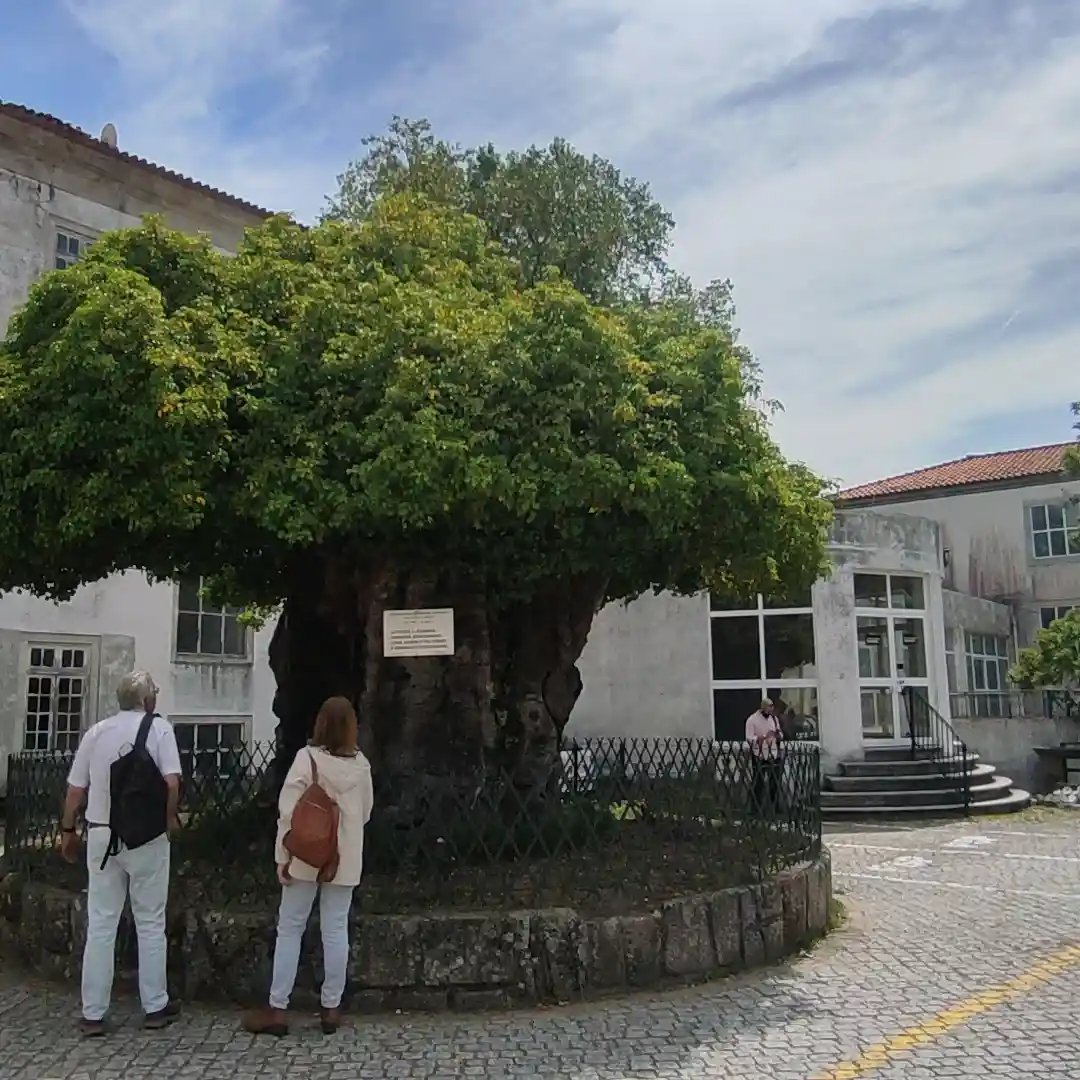
The Gardens of Nossa Senhora dos Remédios are a serene escape nestled along Lamego’s iconic staircase. Lush greenery, manicured hedges and playful fountains create a peaceful pause between climbs. Perfect for a quiet stroll or a scenic break, the gardens blend natural beauty with the site’s spiritual charm.
In the Gardens stands a monumental chestnut tree (Castanea sativa), estimated to be 750–900 years old. With a trunk about 4 meters wide. Classified as a Tree of Public Interest since 1940, it is one of the oldest trees in Portugal and a key feature of the sanctuary’s baroque landscape.
In the Gardens stands a monumental chestnut tree (Castanea sativa), estimated to be 750–900 years old. With a trunk about 4 meters wide. Classified as a Tree of Public Interest since 1940, it is one of the oldest trees in Portugal and a key feature of the sanctuary’s baroque landscape.
The Avenida
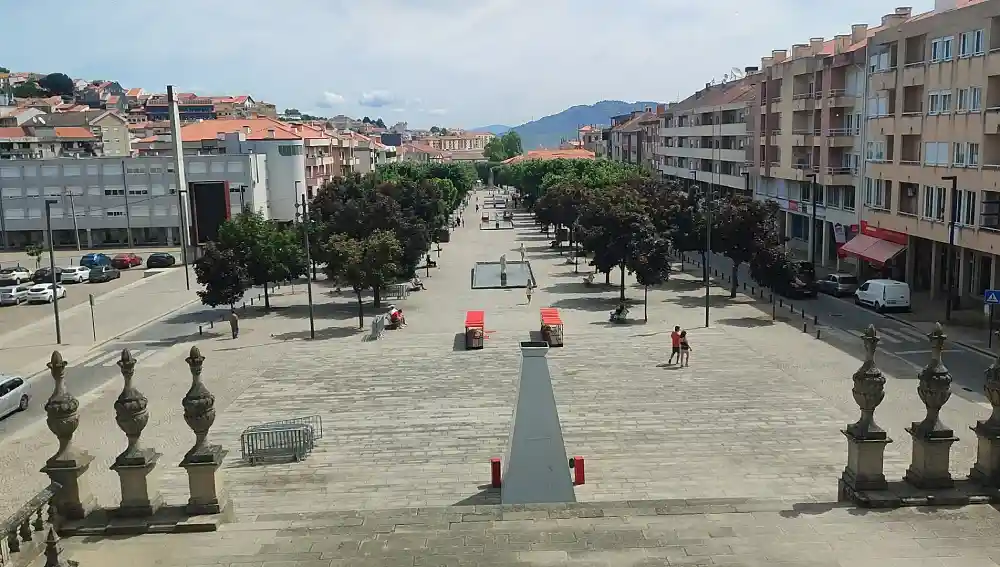
Lamego’s Avenida Dr. Alfredo de Sousa is the city’s elegant main boulevard, lined with trees, cafes, and charming buildings.
Stretching from the cathedral to the iconic staircase, it’s perfect for a leisurely stroll. With lively fountains and shaded benches, the avenue blends everyday life with Lamego’s beauty.
Stretching from the cathedral to the iconic staircase, it’s perfect for a leisurely stroll. With lively fountains and shaded benches, the avenue blends everyday life with Lamego’s beauty.
Capela do Espirito Santo
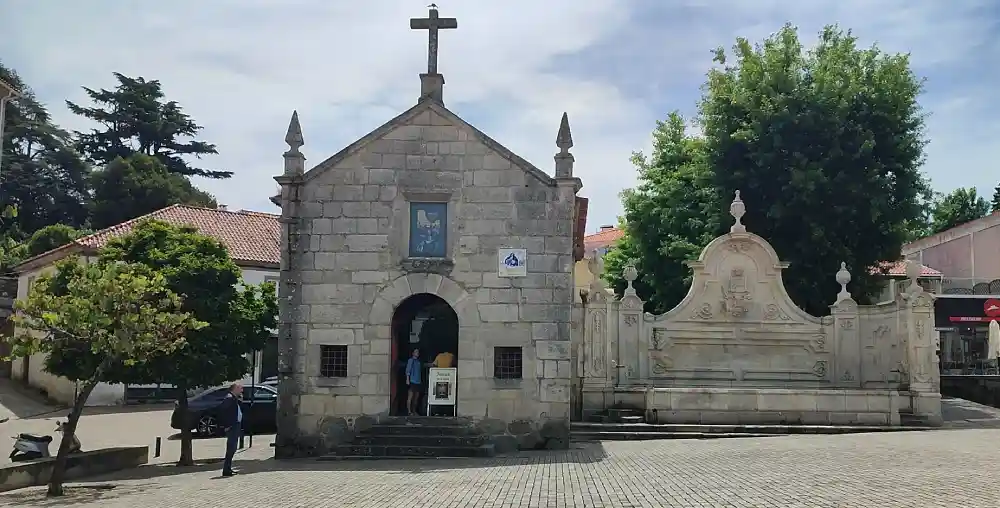
The Capela do Espírito Santo in Lamego is a small yet captivating chapel rich in history and charm.
Tucked away in the city’s historic center, it features simple architecture and serene ambiance. Its quiet presence offers a peaceful spot for reflection amid the bustling streets of this ancient Portuguese town.
It is still an active chapel so please be respectful when visiting.
Tucked away in the city’s historic center, it features simple architecture and serene ambiance. Its quiet presence offers a peaceful spot for reflection amid the bustling streets of this ancient Portuguese town.
It is still an active chapel so please be respectful when visiting.
Catedral de Lamego
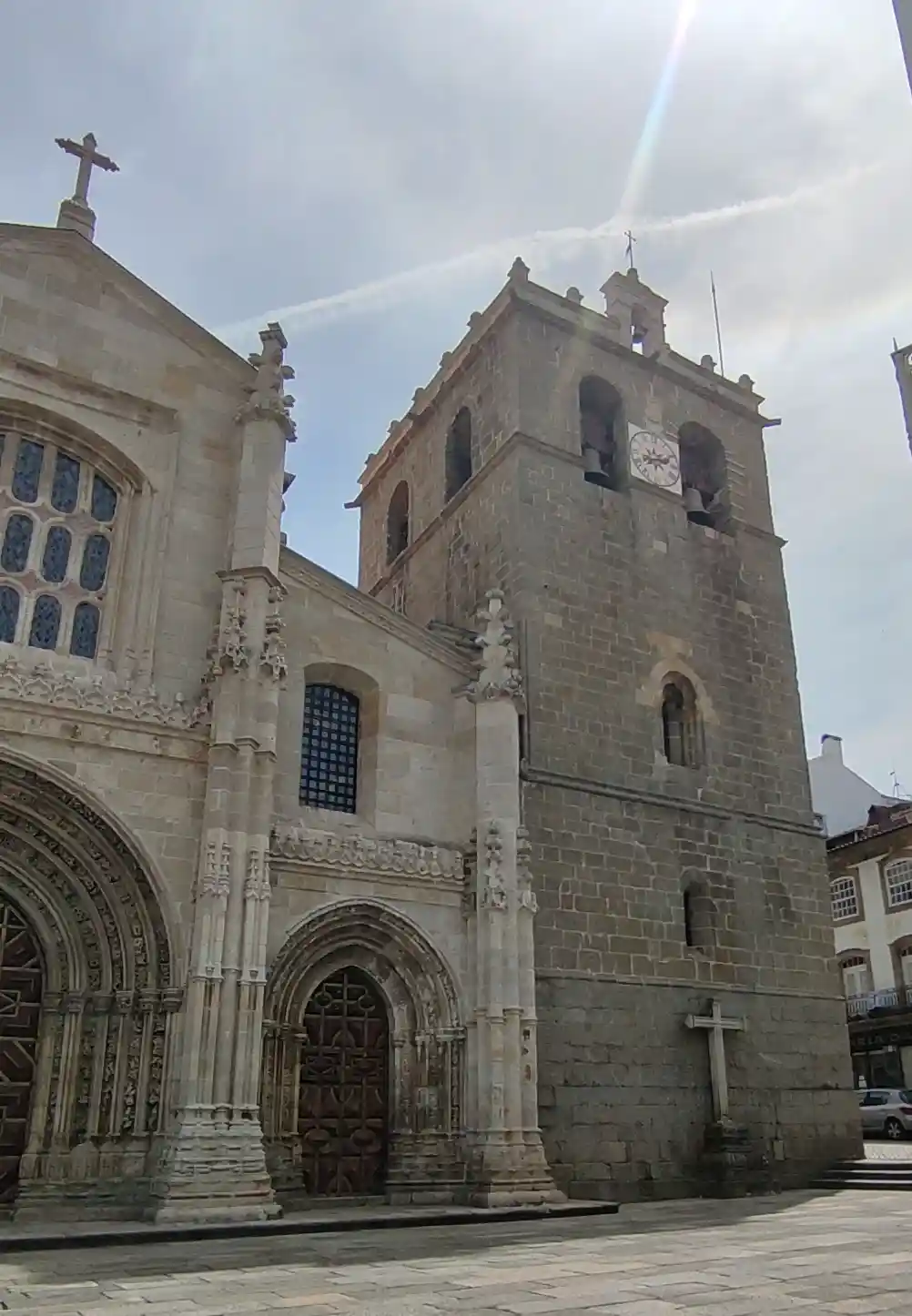
The Catedral de Lamego, also known as the Sé de Lamego, is a magnificent blend of centuries and styles, standing proudly in the heart of this historic Portuguese city.
Originally built in the 12th century, it began as a Romanesque structure but evolved over time, absorbing elements of Gothic, Renaissance, and Baroque architecture, making it a fascinating stop for history buffs and architecture lovers alike.
From the outside, its imposing square bell tower is a standout feature, a remnant of the original medieval design. Step inside and you’re greeted by high vaulted ceilings, intricate woodwork and a beautifully carved altarpiece. One of the highlights is the stunning collection of azulejos that line the interior, adding a touch of color and storytelling to the sacred space.
Visiting Hours
Monday to Sunday:
• 08:00–12:30
• 14:30–19:00
• Free Entry
Originally built in the 12th century, it began as a Romanesque structure but evolved over time, absorbing elements of Gothic, Renaissance, and Baroque architecture, making it a fascinating stop for history buffs and architecture lovers alike.
From the outside, its imposing square bell tower is a standout feature, a remnant of the original medieval design. Step inside and you’re greeted by high vaulted ceilings, intricate woodwork and a beautifully carved altarpiece. One of the highlights is the stunning collection of azulejos that line the interior, adding a touch of color and storytelling to the sacred space.
Visiting Hours
Monday to Sunday:
• 08:00–12:30
• 14:30–19:00
• Free Entry
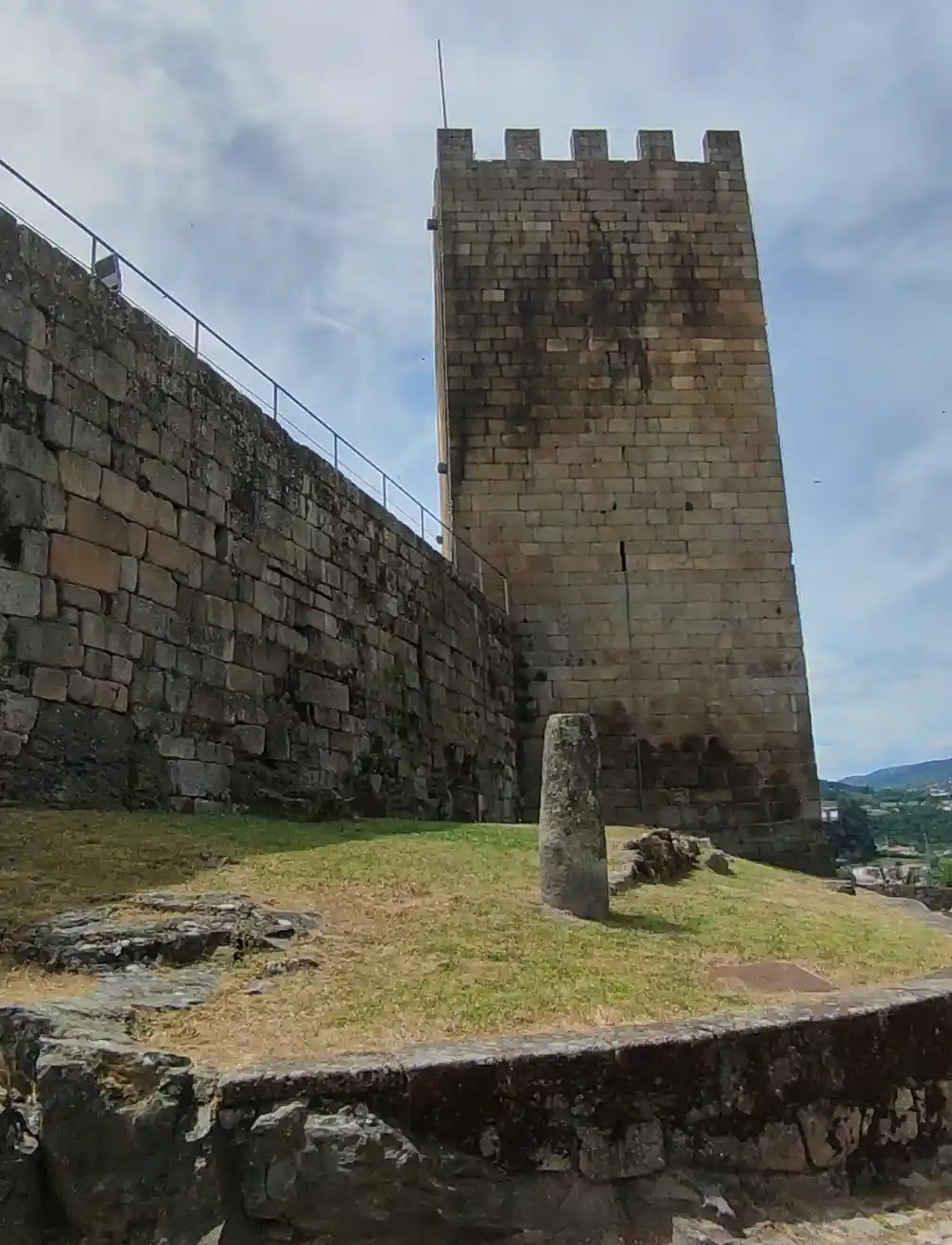
Lamego Castle
Originally built by the Moors and later taken by Christian forces in the 12th century, this hilltop fortress has seen it all: battles, kings, and the passing of time.
The real showstopper here is the keep tower, square, sturdy and dramatically perched with sweeping views over the Douro Valley. Climb to the top (yes, there are stairs) and you’re rewarded with a panorama that stretches for miles.
Visiting Hours
Tuesday to Sunday:
• 10:00–18:00
• Free Entry
The real showstopper here is the keep tower, square, sturdy and dramatically perched with sweeping views over the Douro Valley. Climb to the top (yes, there are stairs) and you’re rewarded with a panorama that stretches for miles.
Visiting Hours
Tuesday to Sunday:
• 10:00–18:00
• Free Entry
The Old Town
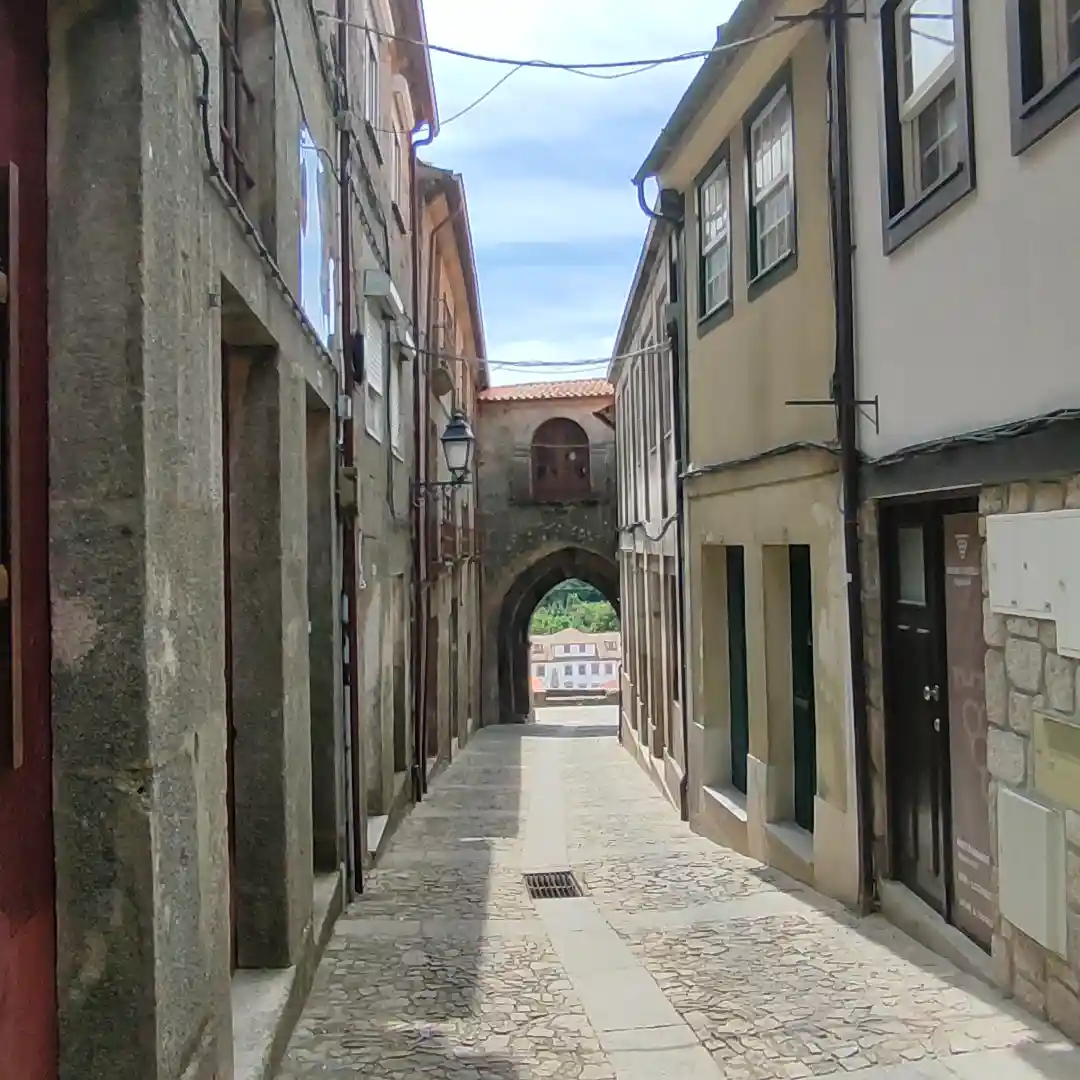
The surrounding Bairro do Castelo is Lamego’s oldest neighborhood, perfect for a post-castle stroll through winding lanes and stone houses.
Whether you’re a history geek, a romantic explorer, or just here for the views, the Castle of Lamego delivers a trip back in time with a side of epic scenery.
With cobbled streets, grand churches, and scenic vistas, it offers a perfect mix of tradition and tranquility, ideal for slow travel, cultural discovery, and savoring the heart of Portugal.
Whether you’re a history geek, a romantic explorer, or just here for the views, the Castle of Lamego delivers a trip back in time with a side of epic scenery.
With cobbled streets, grand churches, and scenic vistas, it offers a perfect mix of tradition and tranquility, ideal for slow travel, cultural discovery, and savoring the heart of Portugal.
Museum of Lemego
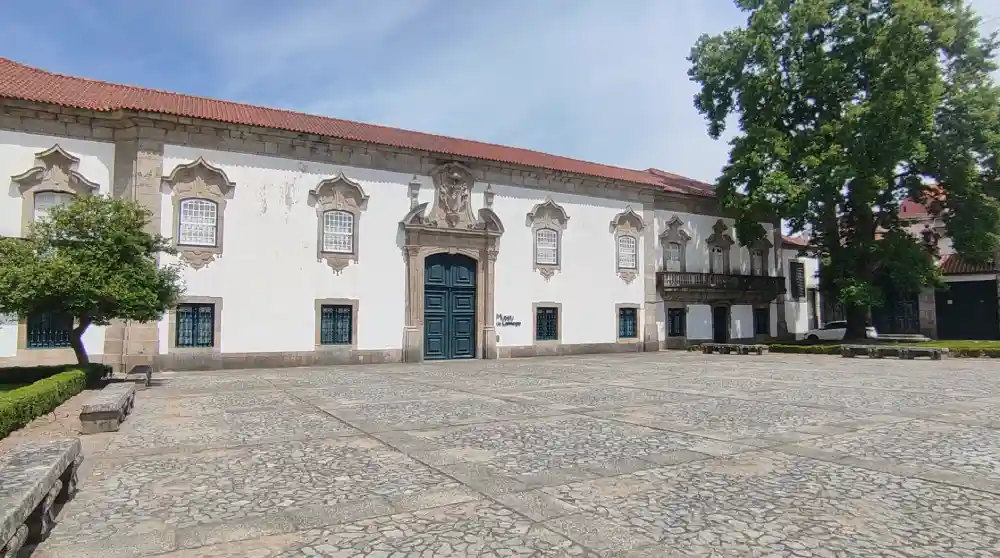
Tucked inside a former bishop’s palace, the Museu de Lamego is an absolute treasure trove for art lovers and curious wanderers alike. This museum punches way above its weight, with everything from Roman relics to Renaissance masterpieces.
The Star of the show is stunning 16th-century paintings by Grão Vasco that’ll stop you in your tracks. You’ll also find rich Flemish tapestries, gilded altarpieces, and one epic medieval sarcophagus featuring a knightly hunting scene. Every room feels like a time capsule. It’s calm, cultured, and just the right dose of wow.
In short: don’t leave Lamego without stopping here.
Opening Hours
• Tuesday to Sunday: 10:00 – 12:30 & 14:00 – 18:00
• Admission: €3 (temporary exhibitions included)
🔨 Note
The museum is currently undergoing renovation works, which may temporarily affect access to some areas. However, the permanent collection and temporary exhibition halls remain open during regular visiting hours.
Opening Hours
• Tuesday to Sunday: 10:00 – 12:30 & 14:00 – 18:00
• Admission: €3 (temporary exhibitions included)
🔨 Note
The museum is currently undergoing renovation works, which may temporarily affect access to some areas. However, the permanent collection and temporary exhibition halls remain open during regular visiting hours.
Pope Statue
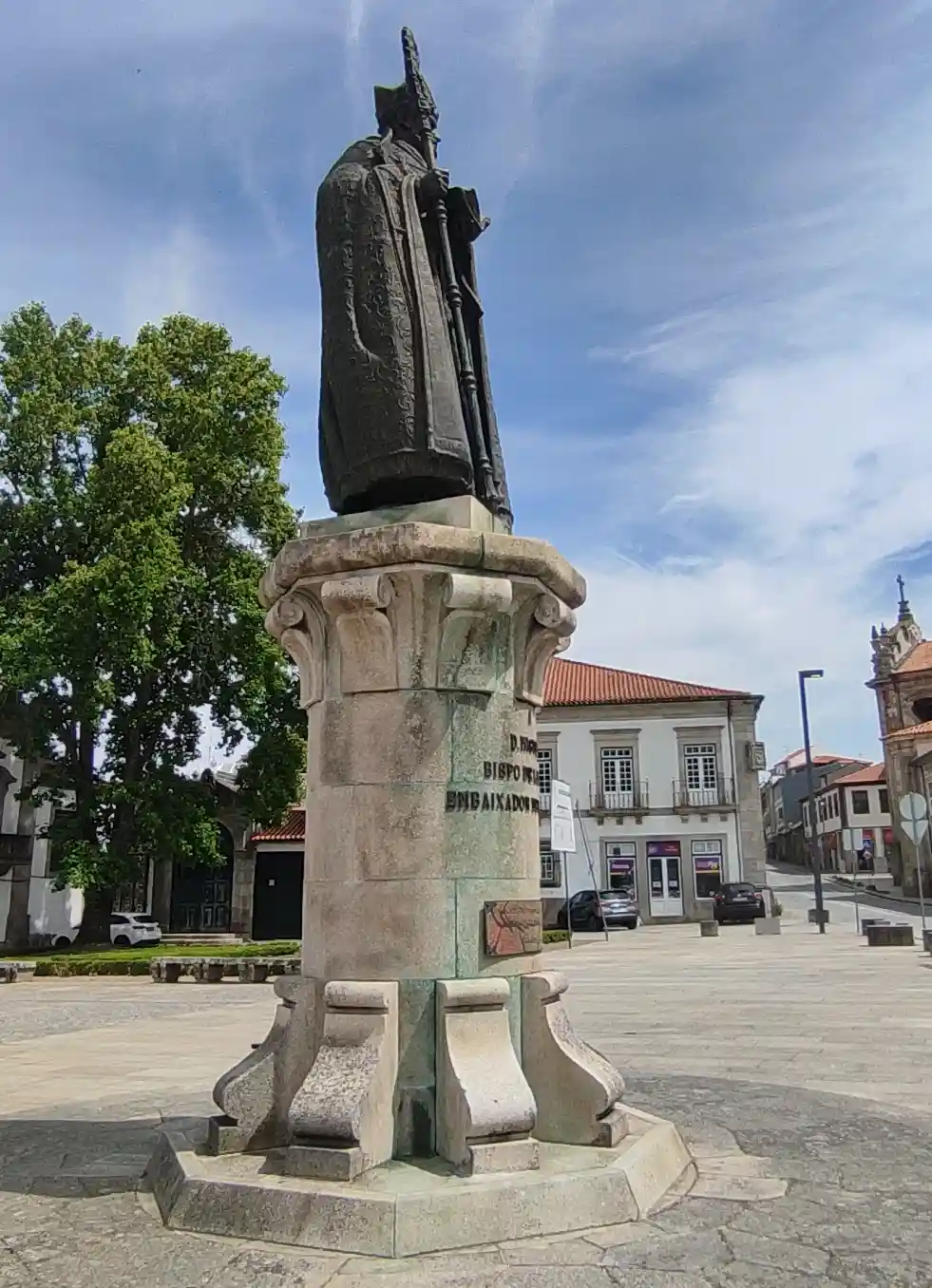
Standing tall in Lamego’s historic heart, the Statue of Dom Miguel de Portugal, honors a 17th-century bishop and diplomat who played a pivotal role during Portugal’s Restoration period.
Crafted by sculptor Francisco Franco in 1951, this cast-iron figure atop a granite pedestal is more than just a monument, it’s a tribute to a man who helped shape the nation’s destiny.
The Country Side
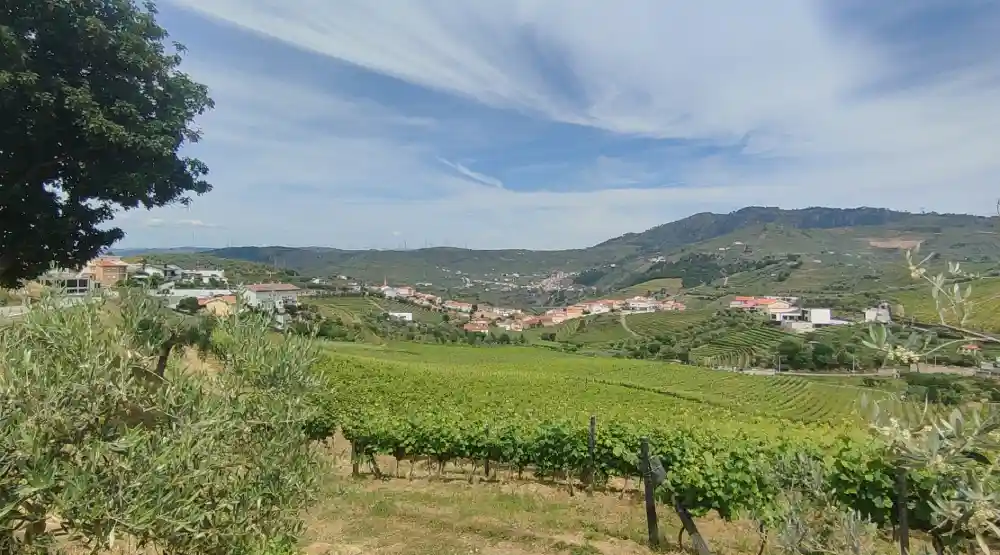
The countryside around Lamego is pure postcard material, rolling vineyards, terraced hills and winding roads that reveal stunning Douro Valley views.
Olive groves and quaint stone villages dot the landscape, offering a peaceful, timeless charm.
It’s the perfect place to slow down, breathe deep and soak in rural Portuguese beauty.